

Nigeria pushes for broadband expansion, infrastructure protection
By Chioma Obinagwam
At a Business Roundtable hosted by the Nigerian Communications Commission (NCC) at its Digital Economy Complex, Dr. Aminu Maida, Executive Vice Chairman of the NCC, emphasized the critical role of broadband connectivity in driving Nigeria’s economic growth and national resilience.
A press statement sighted by Confiance News disclosed.
Speaking on the theme “Right of Way and Protection of Broadband Infrastructure – The Road to Success in Broadband Investment and Connectivity,” Maida outlined ambitious plans to achieve 70% broadband penetration by the end of 2025, while addressing persistent challenges like infrastructure vandalism and high Right of Way (RoW) fees.
Maida highlighted the transformative power of connectivity, noting its impact on diverse sectors—from industrialists in Enugu to merchants in Kano and security services relying on real-time intelligence. “Connectivity is the quiet enabler,” he said, warning that disruptions lead to lost opportunities, stalled productivity, and, in critical cases, risks to lives. With Nigeria’s broadband penetration at 48.81% as of August 2025, serving over 140 million internet users, Maida cited research showing that a 10% increase in penetration could boost GDP by 1.38% in developing economies. He pointed to Rwanda and India as models, where heavy investment in digital infrastructure fueled economic growth.
Under President Bola Ahmed Tinubu’s leadership and the guidance of Dr. Bosun Tijani, Minister of Communications, Innovation and Digital Economy, the NCC is advancing the National Broadband Plan (2020–2025), aiming to deploy 90,000 kilometers of fiber optic infrastructure. A significant milestone was the June 2024 signing of the Critical National Information Infrastructure (CNII) Presidential Order, which strengthens protections for telecom assets. The NCC, in collaboration with the Office of the National Security Adviser (ONSA), has established a Telecommunications Industry Working Group to enforce this mandate, focusing on site security, compliance, and public awareness campaigns to curb vandalism.
Despite progress, challenges persist. Between January and August 2025, Nigeria recorded 19,384 fiber cuts, 3,241 equipment thefts, and over 19,000 cases of denied access to telecom sites, causing outages and revenue losses. High RoW fees charged by some state governments remain a barrier, though 11 states, including Adamawa and Enugu, have waived these fees entirely, and 17 others have capped them at N145 per meter. Maida urged all states to adopt uniform, pro-investment policies, including 100% RoW waivers, streamlined permitting, and “dig-once” coordination to prevent fiber damage.
The NCC has also approved cost-reflective tariffs to boost investor confidence, securing over $1 billion in commitments for broadband expansion. Additionally, a wholesale Fiber Study aims to enhance backbone access for Internet Service Providers, while expanded performance disclosures will improve accountability.
Maida called on state governors to partner in protecting telecom infrastructure, adopting digital-infra funds, and supporting hybrid power solutions to enhance network reliability. He announced the upcoming launch of the Ease of Doing Business Portal and the Nigeria Digital Connectivity Index to drive transparency and competitiveness.
“Prosperity lies in data, connectivity, and human potential,” Maida concluded, urging collective action to ensure Nigeria’s youth become creators in the global digital economy. With alignment, he believes Nigeria can become a continental digital powerhouse, but delays risk marginalization in the accelerating global digital race.

Share




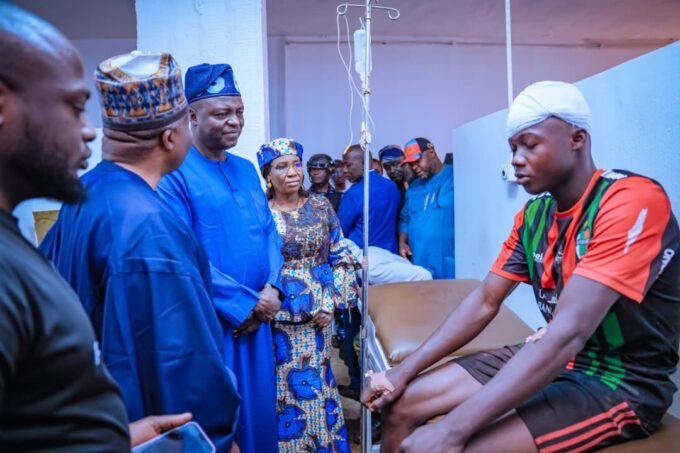
Why APC Chairman donated ₦15m to victims of Plateau killings
By Chioma ObinagwamThe National Chairman of the All Progressives Congress (APC), Professor Nentawe Goshwe Yilwatda, visited victims of the Angwan Rukuba attack on...
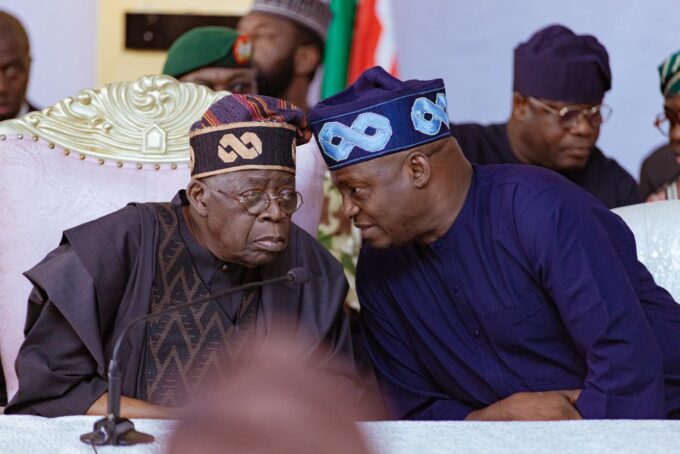
APC Chairman demands tech-driven Security to end Plateau bloodshed
By Chioma ObinagwamProfessor Nentawe Yilwatda, National Chairman of the All Progressives Congress (APC), has formally commended President Bola Ahmed Tinubu, GCFR, for his...
Related Articles
Why APC Chairman donated ₦15m to victims of Plateau killings
By Chioma ObinagwamThe National Chairman of the All Progressives Congress (APC), Professor...
APC Chairman demands tech-driven Security to end Plateau bloodshed
By Chioma ObinagwamProfessor Nentawe Yilwatda, National Chairman of the All Progressives Congress...



N4.65 Trillion in the Vault, but is the Real Economy Locked Out?
By Blaise UdunzeFollowing the successful conclusion of the banking sector recapitalisation programme...
Leave a comment