



By Joan Chioma Obinagwam
In an era where sustainability is no longer a choice but a necessity, Nestlé Nigeria is leading the charge by transforming waste into wealth and redefining sustainable sourcing. Through innovative practices, the company is turning agricultural by-products and post-consumer waste into valuable resources, creating a circular economy that benefits both the environment and local communities. By integrating cutting-edge technologies and strategic partnerships, Nestlé Nigeria is not only reducing its ecological footprint but also empowering farmers, generating economic opportunities, and setting a global benchmark for sustainable business practices in the food and beverage industry.
Numbers don’t lie
Consumer waste is increasing at an alarming rate. According to data mined from the United Nations Environment Programme (UNEP) Plastic Pollution Overview, between 19 and 23 million tonnes of plastic waste leak into aquatic ecosystems—oceans, rivers, and lakes—every year.
Furthermore, the total global plastic waste generated in 2024 is estimated to be around 400 million tonnes.
A Dataphyte report (operating as a social impact organization focused on access to information for development), published in June 2023, states that Nigeria generates more than 32 million tonnes of waste annually, with Lagos alone producing about 10,000 metric tonnes of waste daily. According to a 2024 World Bank study titled Improving Solid Waste and Plastics Management in Lagos State: A Way Forward, Africa is the second-largest contributor to global ocean plastic pollution, accounting for 7.8 percent of annual plastic inputs from rivers—second only to Asia.
These alarming figures underscore the urgency of tackling the global waste menace.
Driving impact through CSV
Launched in 2007, Nestlé’s Creating Shared Value (CSV) is a bold business philosophy that places societal good at the core of corporate strategy. Far beyond charity or basic compliance, CSV means Nestlé creates business value by addressing social and environmental challenges affecting people, communities, and the planet. This approach was pioneered by the company and is rooted in the belief that business success and societal progress go hand in hand.
Reacting to CSV, the Managing Director and Chief Executive Officer (MD/CEO) of Nestlé Nigeria, Wassim Elhusseini, said: “Progress is shared or it isn’t progress at all. Our company’s business principle is grounded in the belief that business must contribute to societal well-being through Creating Shared Value.”
This philosophy has become the company’s guiding principle in tackling consumer waste, environmental pollution, water scarcity, exploitative sourcing, and other unsustainable practices.
Waging war on waste
In its sixth year, Nestle Nigeria has intensified its fight against waste, and reaffirmed its commitment to environmental sustainability through a nationwide clean-up and community sensitization campaign.
In a statement on its official website dated June 11, 2025, it disclosed that the initiative, executed in collaboration with the African Clean-Up Initiative (ACI) and local authorities, mobilized a total of 516 Nestlé Cares volunteers from the Nestlé head office, branch offices, and factories.
Also, the clean-up efforts spanned 11 cities, focusing on high-footfall market hubs such as Oke-Arin Market in Lagos, Utako Market in Abuja, Abubakar Rimi Market in Kano, Satellite Market in Jos, Sabo Market in Sagamu, Bodija Market in Ibadan, Okoko Market in Agbara, Abaji Market in Abaji, Holyghost Market in Enugu, Aguawka Market in Awka and Mile 3 Market in Port Harcourt.
The locations, the statement revealed, were strategically selected based on their waste burden and community impact, resulting in the collective removal of 5,601 kilograms of solid and 379.2 kilograms of recyclable waste, highlighting the tangible results of corporate-community collaboration.
Not only that, to reduce waste, the food and beverage titan has repackaged most of its brands while maintaining the original content. Packaging Manager at Nestlé Nigeria, Adewale Kayode, said, “The packaging is smaller, but not the content. To minimize waste, we are only using the sizes we need.”
Turning waste into wealth
With over 61,000 metric tonnes of plastic waste scooped from Nigerian markets and streets since 2019, Nestlé is not just picking trash; it is reinventing recycling. Through partnerships with local waste recyclers such as Alef Recycling, Chanja Datti, and Wecyclers, and in line with its CSV philosophy, Nestlé is creating wealth for individuals and companies in the recycling value chain.
Reacting to Nestlé’s commitment to recycling, the Corporate Communications, Public Affairs and Sustainability Lead at Nestlé Nigeria, Victoria Uwadoka, said, “We are committed to not just minimizing our footprint, but actively reversing it. Plastic neutrality is not a slogan for us. It is a measurable, ongoing reality.”
Beyond plastic neutrality, Nestlé plays a critical role in sustaining local recycling businesses. The Chief Executive Officer (CEO) of Alef Recycling Company, Wissam Ramlawi, who recognizes Nestlé as his principal customer and key stakeholder, affirmed that the company’s commitment to rigorous standards has encouraged him to invest in the most advanced and efficient recycling machinery in the country. He further emphasized that the Nestlé Pure Life bottle consists of 50 percent recycled materials and 50 percent virgin materials—processed under the highest hygienic conditions in compliance with international standards—highlighting Nestlé’s unwavering dedication to both sustainability and public health.
Moreover, Nestlé’s innovative initiatives, such as the Safety, Health, and Environment (SHE) Training Programme, which has trained over 100 plastics waste workers, exemplify a vision that regards waste as a valuable resource rather than refuse.
Saving every drop
Water—the lifeblood of both people and industry—also commands Nestlé’s fierce attention. In its factory operations, Nestlé has reduced water consumption by up to 70 percent, employing cutting-edge technologies that conserve this precious resource without sacrificing productivity. Collaborations with federal ministries and grassroots groups extend these conservation efforts beyond factory walls, reaching communities living on the edge of water scarcity.
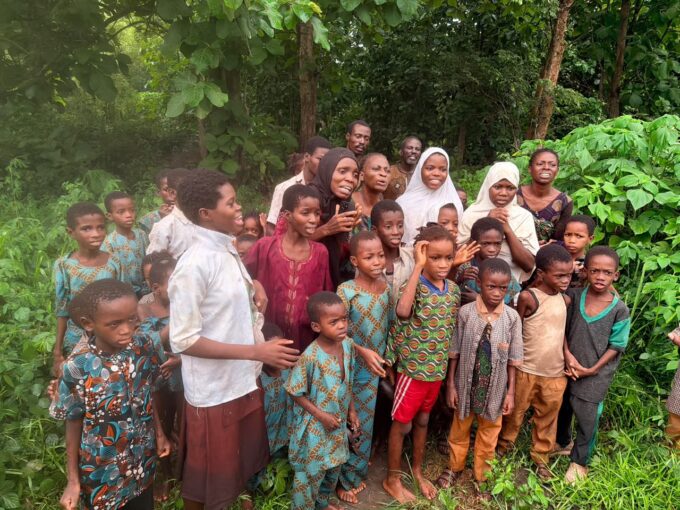
Equally important is Nestlé’s commitment to improving access to clean water in underserved areas where it operates. One such community is Manderegi, located in Abaji, Federal Capital Territory, which faced severe water scarcity due to a non-functional borehole project. Following an investigative report by The ICIR, Nestlé Nigeria honored its pledge by repairing the borehole and installing a generator to pump water. The community now has consistent access to clean water, significantly improving residents’ quality of life.
Another beneficiary of Nestlé’s Creating Shared Value (CSV) principle is Korogboji, located in Ogun State in the southwestern region of Nigeria. Identified as one of the communities affected by water scarcity and contamination, Korogboji was included in broader initiatives by Nestlé and government partners to provide safe drinking water.
It is no surprise that Nestlé inscribed the names of both communities in the quote titled Bringing Life to Our Communities: “By bringing safe and clean drinking water to those who need it within the communities where we operate,” which is featured on every Nestlé Pure Life bottle.
This stands as a testament to Nestlé’s unwavering commitment to providing safe drinking water to society.
Committing to Sustainable sourcing
Sustainability for Nestlé is not just about curbing pollution; it means restoring the land and protecting biodiversity. The company champions forest-friendly sourcing and promotes regenerative agricultural practices that support local ecosystems. In May 2025, through its partnership with AGRA, Nestlé Nigeria and TechnoServe launched the Strengthening Farmers’ and SMEs’ Resilience through Climate Smart Grain Production and Accessing the Structured Markets (StreFaS) initiative in Nigeria.
StreFaS helps to improve soil health, lower greenhouse gas emissions, increase biodiversity, and strengthen economic resilience. Additionally, the programme connects smallholder farmers to formal markets, including Nestlé’s supply chain, enabling them to receive premium prices for climate-smart produce.
Reacting to the initiative, one of the farmers, Engineer Lawan Abdul, shared a compelling testimonial:
“Since I started adopting the strategies taught in this project, my yields have increased by 100 percent. This was very surprising and encouraging for me. I am very happy with the outcome and thank the project partners and MAGGI for bringing this opportunity to us.”

Participants of the 8th edition of Nestlé Nigeria’s “Advancing Nutrition, Health, and Environmental Awareness Through the Media” programme. Photo credit: LBS.
A tree doesn’t make a forest
Moreover, in actualizing its vision, Nestlé recognises the importance of collaboration. It is a member of the Food Beverage Recycling Alliance (FBRA), a Nigerian non-profit industry collaboration platform established in 2013 and officially incorporated in 2018, which aims to unite responsible players in the food and beverage industry to support and scale up post-consumer waste collection, buyback, and recycling programmes. The alliance promotes sustainability by implementing the Extended Producer Responsibility (EPR) policy, following guidelines from the National Environmental Standards Regulations and Enforcement Agency (NESREA).
Media as strategic partner
Since its inception in 2018, Nestlé Nigeria’s “Advancing Nutrition, Health, and Environmental Awareness Through the Media” programme, in partnership with Lagos Business School (LBS) Sustainability Centre, has trained over 100 journalists. The initiative equips media professionals with skills in data-driven storytelling and solutions journalism, focusing on nutrition, health, and environmental sustainability. By fostering informed reporting, it amplifies Nestlé’s commitment to sustainable sourcing and a greener environment. The programme aligns with Nestlé’s strategy to promote sustainable food systems, reduce carbon emissions, and ensure responsible raw material sourcing, as demonstrated during factory tours showcasing eco-friendly production processes.
Hurdles
In the midst of the success stories, Nestlé also faces its share of challenges. While Nestlé’s contribution of 61,000 tonnes over six years represents a positive effort, it accounts for only a fraction of the total problem. This highlights a critical reality: corporate efforts, however well-intentioned, cannot substitute for a comprehensive, government-led waste management infrastructure. As a Lagos market trader succinctly put it, “The clean-ups are good, but the system is broken. We need more than just a clean-up; we need a proper place to put our waste every day.”
The company asserts that it has made significant strides in conservation, citing a 40 percent reduction in water consumption per tonne of product across its Central and West Africa operations over the past six years. This represents a crucial internal efficiency gain.
These efforts, while positive, must be weighed against the broader context of water usage by large industries in a nation facing growing water stress. The real question is not just how much water the company saves, but what its total consumption is and how it impacts local water tables and community access. Without full transparency on this data, the public cannot make a complete assessment of the company’s true impact. Moreover, water shortages and climate volatility intensify pressures on food production and ecosystem health.
The company’s commitment to regenerative agricultural practices may face significant obstacles due to resistance from most local farmers to embrace change.
On recycling, the Managing Director of Chanja Datti Limited, Olufunto Boroffice, argued that the sector lacks standardization. She said, “I’ve been around for a while. I’m still waiting to see the standardized framework.”
She added that enforcement mechanisms for the Extended Producer Responsibility (EPR) policy remain inadequate. “On the EPR, people think it is well-enforced. That’s not true—it’s voluntary,” Boroffice pointed out.
Boroffice highlighted the high cost of running a recycling plant due to poor power infrastructure, which has forced some recycling businesses to shut down.
She also noted that informal waste workers are not adequately supported. “In all these conversations, the informal waste workers are excluded from the credit scheme. Even when they are included, they are exploited,” she lamented.
The CEO of Chanja Datti further noted that many small-scale companies using plastics in their production are neither members of the Food Beverage Recycling Alliance (FBRA) nor compliant with Extended Producer Responsibility (EPR) guidelines, thereby undermining the efforts of responsible companies like Nestlé. Additional challenges include inconsistent government policies and infrastructural deficits.
The path forward
The government’s role is to serve as the primary architect and enforcer of a national environmental strategy. This demands a shift from fragmented, reactive policies to a cohesive and proactive framework. As Boroffice highlighted, most laws governing the recycling sector are not enforced.
Corroborating Boroffice, Eugene Itua—Director of the Africa Green Economy and Sustainability Institute (AGESI) and an environmental and sustainability expert—emphasized that for Nigeria to actualize its environmental and sustainability goals, the government must prioritize implementing existing laws rather than merely creating new ones. He stated, “Nigeria is not short of policies. What we should be interested in is policy and practice.”
While acknowledging that Nestlé has made significant strides, there remains a need to intensify community engagement and extend its Creating Shared Value (CSV) principles deeper into the hinterlands, where rural and underserved communities reside.
Since a single tree does not make a forest, the importance of collaboration cannot be overemphasized. As Boroffice pointed out, there is a need for legislation that mandates any company using plastics or environmentally degrading materials—particularly those in the food and beverage sector—to join the Food Beverage Recycling Alliance (FBRA).
Nestlé should continue to invest in innovation, especially in this era of rapid technological advancement.
Nestlé should continue to invest in innovation, especially in this era of rapid technological advancement.
The media, as strategic partners, should focus on solutions journalism that addresses problems rather than stopping at investigative reporting. According to communication strategist and journalist Chido Nwakanma, “Recognise that problems can be solved indirectly and report on that too.” In doing so, they will illuminate innovative pathways to drive sustainability.
Undoubtedly, Nestlé Nigeria remains steadfast in its commitment to achieving net-zero greenhouse gas emissions. Guided by a structured three-phase roadmap—targeting a 20 percent reduction by 2025, 50 percent by 2030, and full net-zero by 2050—the company must continue to reinforce its existing efforts and proactively address any remaining gaps to ensure long-term sustainability.
Director of the Lagos Business School (LBS) Sustainability Centre, Oreva Oghene Atanya, notes that the global Sustainable Development Goals (SDGs), the African Union’s (AU’s) Agenda 2063, and Nigeria’s Agenda 2050 are highly ambitious and demand collaborative efforts from all stakeholders.
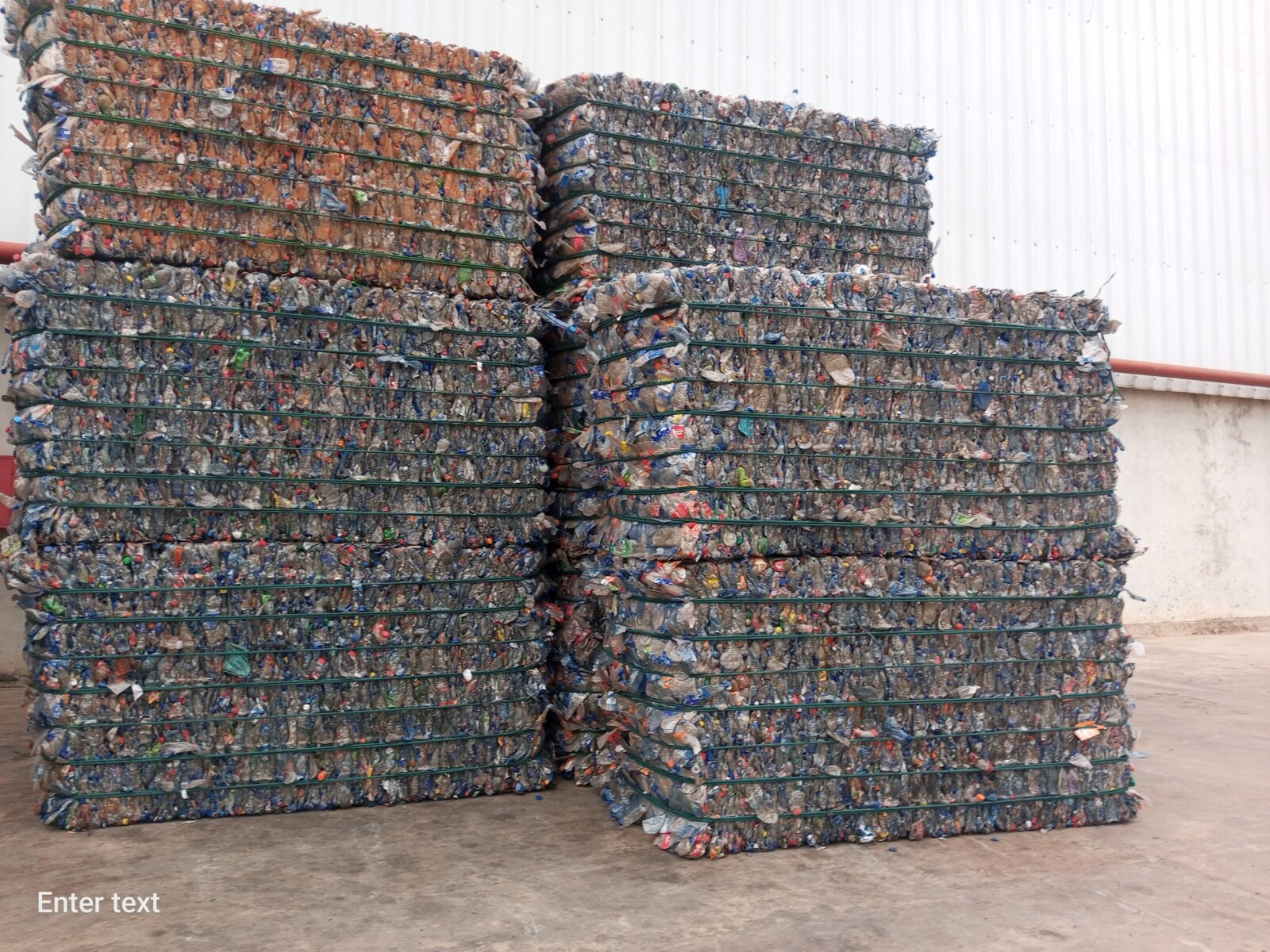
*Cover photo: Compressed plastic PET wastes ready for recycling. Photo credit: Joan Chioma Obinagwam. Source: Alef Recycling Company, Agbara, Ogun State.







Leave a comment