



By Chioma Obinagwam
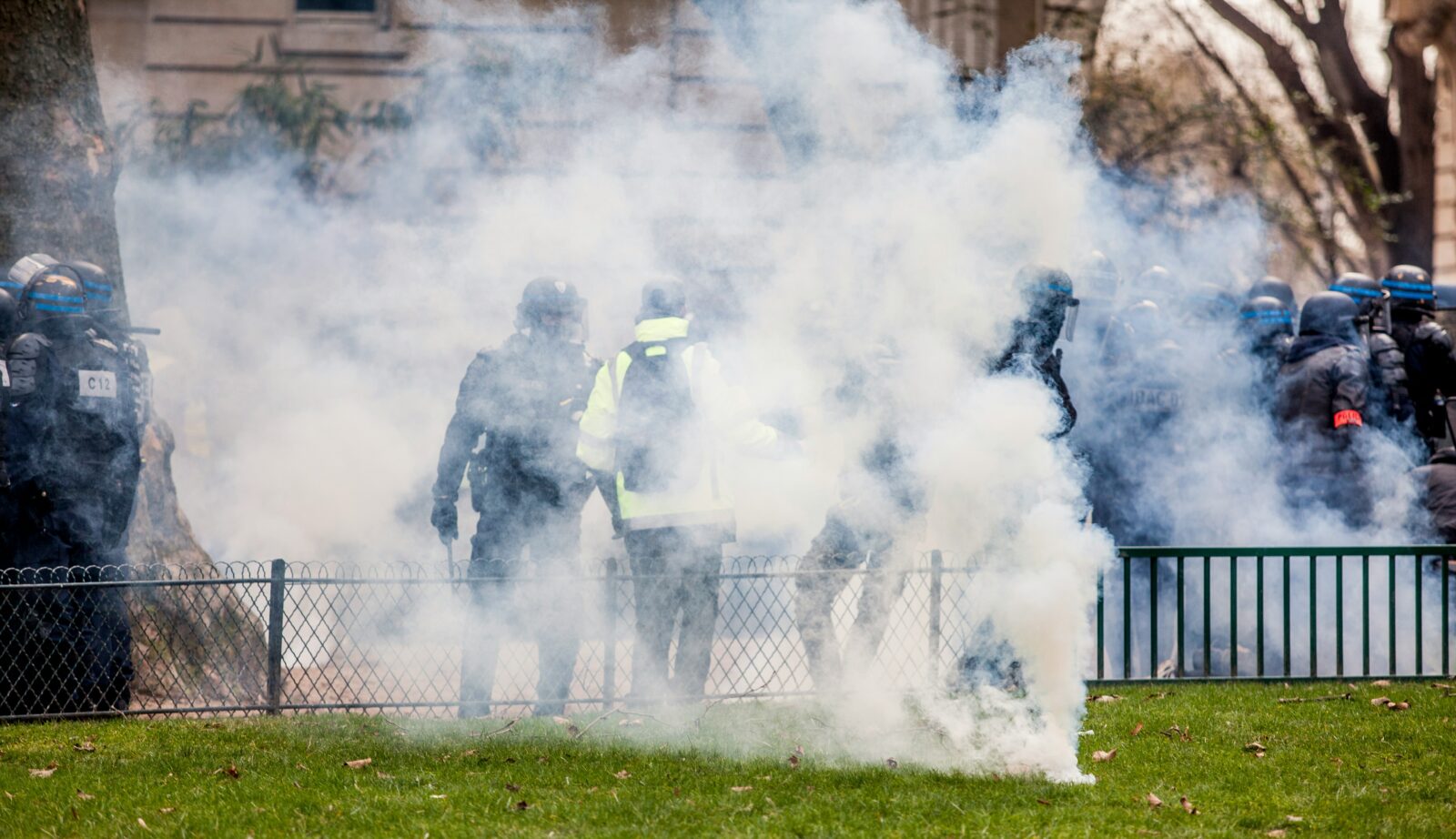
Tear gas, a staple in riot suppression, is not a true gas but an aerosolized irritant designed to incapacitate without lethal force. Its primary active ingredient is 2-chlorobenzalmalononitrile (CS), a white solid compound dispersed via canisters, sprays, or grenades. Other variants include ω-chloroacetophenone (CN), bromoacetone, and oleoresin capsicum (OC) from peppers, which activate pain receptors like TRPA1 or TRPV1, triggering inflammation in mucous membranes. Developed in the 1920s and first used in World War I, CS gained prominence in the 1950s for its potency and rapid dispersal.
Confiance News gathered that security operatives favour tear gas for its non-lethal profile, allowing crowd dispersal while minimizing fatalities compared to firearms. It induces temporary blindness, coughing, and disorientation, forcing compliance without direct confrontation.
However, this “humane” alternative carries significant health risks. Short-term effects include severe eye burning, excessive tearing, blurred vision, respiratory distress, nausea, and skin irritation, lasting 15-30 minutes in fresh air. Vulnerable groups—children, asthmatics, pregnant women, and the elderly—face heightened dangers, with indoor exposure exacerbating suffocation or chemical burns.
Confiance News also reports that long-term consequences are understudied but include chronic respiratory issues, glaucoma, cataracts, dermatitis, and menstrual disruptions, as seen in Portland’s 2020 protests. Excessive use can lead to deaths, particularly from asphyxiation or canister impacts.
In Nigeria, tear gas has been a go-to for quelling unrest. During the 2020 #EndSARS protests against police brutality, forces fired it indiscriminately in Abuja and Lagos, dispersing crowds at the police headquarters and Lekki Toll Gate, where it preceded lethal shootings. In 2012 fuel subsidy riots, police used it in Kano to break sit-ins, detaining dozens. More recently, 2024 economic hardship demonstrations saw tear gas in Abuja and Kaduna, with Amnesty International reporting suffocations and at least 13 deaths. On October 20, 2025, during #FreeNnamdiKanuNow demonstrations in Abuja, police deployed it pre-emptively against protesters, arresting bystanders.
Confiance News recalls that activists Precious Oruche, while reacting to the use of tear gas to crack down on protesters, said in Pidgin: “Tear gas na water,” which translates to “Tear gas is water” in English.
Read also: “Tear gas na water”: Oruche defies security crackdown on #FreeNnamdiKanuNow protesters in Abuja
Legally, tear gas is permissible under Nigeria’s Police Act and 1999 Constitution (Section 45), which allow “minimum force” for public order, classifying it as a riot control agent, not a chemical weapon banned by the Geneva Protocol. Yet, human rights groups decry its misuse as excessive, violating protest rights (Section 40) and international standards against disproportionate force. Calls for regulation persist amid ongoing abuses.






Leave a comment