

By Ummie Kabir
A country is classified as developed if it is able to provide qualitative life for her citizenry irrespective of their social status. Unfortunately, Nigeria for over six decades has been battling with the problems of development not withstanding the vast human and natural resources the country is endowed with. As critical and desirable as the issue of development, it is never a free gift. Rather, it is a product of deliberate planning, tenacious execution and effective resource utilization.
Indeed, Nigeria is a paradox as abundant human and natural resources at her disposal could not be effectively harnessed to launch the country on the path of development. With over six and half decades after independence, the country still grapples with symptoms of underdevelopment in all ramifications.
Indicators are failing
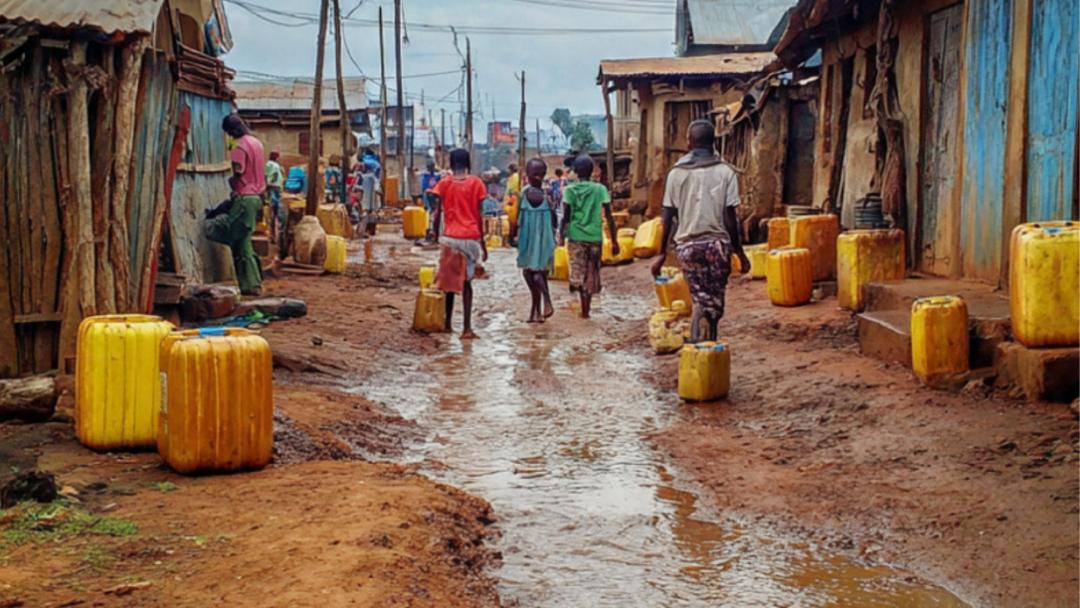
The situation is worrisome for the country as most socioeconomic indices which serve as hallmarks of development are looking downward. Social indicators which comprise of poverty rates, health factors like nutrition and life expectancy, child and maternal welfare and qualitative education are quite disturbing.
Nigeria’s underdevelopment is characterized by endemic corruption due to poor accountability in public office, gross misapplication of resources, high rate of poverty, extreme inequality, and high rate of unemployment, particularly among a large, youthful population. The economy is monocultured with heavy dependence on oil exports as the main “cash-cow”. Over dependence on oil and gas exports makes the economy vulnerable to global shocks, weak manufacturing sector due to huge infrastructure gap and inflation which the World Bank terms as still high despite rebasing. The country also grapples with low Human Development Index (HDI) due to a malfunctioning educational system bedeviled with mismanaged labour related issues which often result in industrial disputes, inadequate healthcare systems and low literacy rates.
Potential left untapped
The huge potentials of Human and Natural Resources especially unmotivated skilled professionals and large youthful population are left untapped for development, often resulting in “brain drain” just as the natural resources are either lying fallow or they are being exploited uncoordinated for the benefit of few individuals.
The intertwined problems of low technical expertise, inappropriate deployment of the manpower and exodus of skilled manpower due to poor reward system have rendered the country helpless and a dumping ground for all manner of human capital importation in the name of expatriate quota.
Insecurity kills everything
The big elephant in the room presently is insecurity in the forms of government sectional agitation and violent crimes like banditry, kidnapping, insurgency impeding development activities, especially in rural areas.
Linked to the above is the inability of the country to feed her citizens despite the large expanse of arable land and clement weather condition due to multidimensional challenges confronting the agricultural sector such as low mechanization and policy inconsistency, causing the country to be a net food importer. Insecurity continues to cast a long shadow over both agriculture and livestock production. Across several states, farmers grapple with constant threats of insurgency, kidnapping, and displacement. Herders too, are not spared, as clashes over grazing routes and access to water resources intensify. The link between insecurity and the decline in agricultural production is undeniable. Fields are left uncultivated, harvests are abandoned and wasted while entire communities are forced to flee to safety.
Poverty’s deepening grip
The country is saddled with low per capita income, officially ranked around 146th out of 191 countries, representing roughly 19% of the world’s average amidst high poverty rate. According to a 2025 World Bank report, the poverty rate in Nigeria has risen to approximately 61% meaning that about 139 million people live below the poverty threshold. This represents a significant increase from 40% — that is about 81 million people — as at 2019.
The country is experiencing high rural-urban migration amidst rapid population growth estimated to be approximately 237.5 million to 242.6 million people in 2026. It is the most populous country in Africa and the sixth most populous in the world. Nigeria has a young, rapidly growing population with a median age of 18.1 years but with a low skilled rate which restricts economic growth and keeps the majority of the population in subsistence condition.
The irony is that till date, Nigeria still talks and boasts of the potentials available in the endowed natural resources awaiting to be efficiently tapped for the common good of her citizens. Moreover, over the years, the country has been susceptible to external economic shocks just like what we are currently going through as a result of the crisis in the Middle East.
Corruption runs deep
Of course, central to the discussions among analysts who seek to query why a country endowed with such potentials remains underdeveloped. The stark reality is that the obstacles to progress are multifaceted and deeply entrenched in socio-economic and political dimensions. Nigeria’s underdevelopment is primarily driven by endemic corruption which laid the foundation for systemic failures at both national and sub-national levels, weak institutions, inability to diversify away from a monoculture economy, and poor infrastructure. These factors, compounded by insecurity and disjointed education curricula, have hindered meaningful growth and economic diversification, resulting in high unemployment, widespread poverty and the loss of talents to emigration.
Plans without progress
Enough of lamentations and blame game over the level of decay. Rather, it should be made clear that development is never served ‘à la carte at a dinner table’ but a deliberate and decisive effort to relaunch the country on the path of socioeconomic prosperity.
Nigeria has never lacked development strategy. Right from the first national development plan spanning from colonial times (1946) to the present, the country has shifted from colonial infrastructure projects to medium-term economic plans and modern perspective plans. Key ones include the 1946-1956 Colony Plan, post-independence National Development Plans (1962-1985), rolling plans (1990-2007), and current long-term strategies like the National Development Plan (NDP) 2021-2025, which aims to diversify the economy and alleviate poverty.
The most recent is the National Development Plan (NDP) 2021-2025, which served as the medium-term blueprint designed to unlock potential across all economic sectors, aiming for sustainable, inclusive growth. It targets creating 21 million full-time jobs and lifting 35 million people out of poverty by 2025. In the saddle right now is the Nigeria Agenda 2050, aiming to unlock economic potential through infrastructure investment, industrialization, and private-sector-led growth. The Plan was formulated through a collaborative process involving the private sector, sub-national governments, and civil society, ensuring a broad-based, participatory approach to economic transformation.
Key goals include lifting 35 million people out of poverty, creating 21 million full-time jobs by 2025, and transitioning to a $1 trillion economy by 2035 through value-addition, as highlighted in the 10-year Industrial Policy Roadmap (2025-2035).
Megaprojects take shape
Nigeria’s development landscape is currently characterized by a shift towards energy, security, regional connectivity, and a massive expansion of the digital economy.
The government has prioritized “megaprojects” ostensibly designed to link the country’s industrial hubs and improve trade logistics. Such projects include the 700-kilometer Lagos-Calabar Coastal Highway to strategically connect nine coastal states.
Also, the Ajaokuta-Kaduna-Kano (AKK) Gas Pipeline, the $2.8 billion project, is expected to unlock industrial potential by powering northern industrial hubs and fertilizer plants. In the area of digital transformation, the country through “Project BRIDGE” has initiated a massive push to move Nigeria from a service-based economy to a digital-first economy.
Africa needs Nigeria
At this juncture, it should be reiterated that Nigeria’s socioeconomic renaissance should not be a source of worry or threat to any nation, especially those with vested interests such as existing trade partners. It should be seen as a strategic move to reposition the country and enhance more opportunities for the benefit of all concerned.
A more industrialised and economically viable Nigeria stabilises the West Africa sub-region supply chains, strengthens security, accelerates the green transition and expands markets for the continent and the entire world. A stable, industrialized Nigeria should be a thing of pride for the sub-region in particular and the continent in general. Nigeria must move deliberately, urgently, and without illusion, not only for its own future, but for the stability and prosperity of the sub-region.
Time for action
Solution to Nigeria’s underdevelopment requires a multi-faceted approach focusing on economic diversification away from oil, industrialisation, enhanced agricultural production and tackling insecurity. The Coordinating Minister for the Economy should rise up to the occasion by mobilising resources and relevant agencies to kick-start this noble task. For now, the critical role of the Central Bank of Nigeria (CBN) cannot be overemphasised. The Bank should not restrict itself to monetary policy role alone as low inflation and financial system stability could be elusive in a malfunctioning economy. The bank possesses the expertise in terms of human resource to drive a meaningful development agenda. Hence, the recent call by the Nigeria Minister of Budget, Atiku Bagudu, that the CBN should not abandon its development financing role entirely, came at the right time. The bank already has well-defined blueprints for various segments of the economy from agriculture to industrialization and incentivised export drive. All the bank needs to do now is to collaborate with relevant organs of government to redirect the economy back on a developmental path.
Tangential to the above is massive and transparent investment in infrastructure, especially power and transportation.
As it stands, power is almost everything when it comes to socioeconomic development. The near absence or epileptic nature of power supply has caused enormous setbacks to the country in no small measure. The time for a lasting solution to this problem is now.
In the area of security, which is too important to be toyed with, government should be resolute in proclaiming that Section 14(2)(b) of the 1999 Constitution of the Federal Republic of Nigeria (as amended) is the primary provision, which states that “the security and welfare of the people shall be the primary purpose of government.” This mandate dictates that all government actions must prioritize protecting lives and property. Presently, this particular constitutional mandate seems elusive. Hence, government should deploy whatever measures at its disposal to combat this hydra-headed challenge confronting the country, particularly in the agricultural belts, as investments go to where security of life and property are guaranteed.
Courts of public opinion assert that curbing corruption is a critical step toward unlocking Nigeria’s true potential, as it would pave the way for a more equitable distribution of resources and strong institutions. Endemic corruption has infected every level of government and public service, where public officials engage in self-serving practices at the expense of the collective good. As such, no effort should be spared in tackling this cankerworm. Corruption not only hinders economic progress but also erodes public trust in institutions that are supposed to serve the citizenry.
No more excuses
In conclusion, Nigeria is not reinventing the wheel but should thread the path to development by relying on diversifying the economy away from oil, closing a $100 billion infrastructure gap, and fostering human capital through a well-structured and funded educational system. Embracing technology can serve as a springboard towards economic prosperity.

Share




Five “Ships” That Can Derail Your Divine Purpose
By Chioma Obinagwam Every person enters the world with a purpose. That was the central message Pastor Femi Atoyebi (SAN), a prominent figure...

Nigerian teen wins Gold at German Mathematics Olympiado
A Nigerian secondary school student has claimed gold at one of Europe’s most prestigious mathematics competitions, outperforming students from over 52 countries.By Chioma...
Related Articles
Five “Ships” That Can Derail Your Divine Purpose
By Chioma Obinagwam Every person enters the world with a purpose. That...
Nigerian teen wins Gold at German Mathematics Olympiado
A Nigerian secondary school student has claimed gold at one of Europe’s...


Tinubu announces ₦5.41trn defence budget on democracy day
By Chioma ObinagwamPresident Bola Ahmed Tinubu marked Nigeria’s 27th year of uninterrupted...
Nigeria’s CBN named Central Bank of the Year 2026
By Chioma ObinagwamNigeria’s years of painful monetary reform have just earned international...
Leave a comment