


By Chioma Obinagwam
Nigeria’s apex bank has kept its benchmark interest rate unchanged, choosing caution over easing as global oil markets reel from renewed conflict in the Middle East.
It was confirmed by Confiance News that the Monetary Policy Committee (MPC) of the Central Bank of Nigeria (CBN), at the end of its 306th meeting held on July 20 and 21, 2026, voted to retain the Monetary Policy Rate (MPR) at 26.5 per cent. All eleven members present at the meeting were unanimous on the decision, according to a communique sighted by Confiance News.
Confiance News gathered that the Committee also retained the Standing Facilities Corridor at +50/-450 basis points around the MPR, alongside the Cash Reserve Requirement (CRR), which stays at 45.00 per cent for Deposit Money Banks, 16.00 per cent for Merchant Banks, and 75.00 per cent for non-TSA public sector deposits.
CBN Governor, Olayemi Cardoso, in the communique obtained by Confiance News, explained that the decision to hold rates reflects a careful balancing of risks, as global uncertainty deepens over renewed hostilities in the Middle East and their potential spillover into domestic inflation.
Why the MPC chose to hold
The rate-hold decision comes at a delicate point for Nigeria’s economy. Although headline inflation has moderated for six consecutive months on a 12-month average basis, the Committee appears unwilling to declare victory just yet. It was learned that the MPC weighed the marginal easing in headline inflation for June 2026 against a fresh wave of global uncertainty triggered by the resurgence of hostilities in the Middle East, particularly the risk that spiking energy prices could pass through to domestic prices.
Confiance News understands that this tension, between improving local fundamentals and a volatile external environment, is at the heart of the Committee’s decision to stay the course rather than begin an easing cycle. Holding the MPR at 26.5 per cent allows the apex bank to keep borrowing costs high enough to continue squeezing inflation out of the system, while it monitors how the Middle East crisis evolves.
Standing Facilities and CRR unchanged, liquidity stance stays tight
By retaining the Standing Facilities Corridor at +50/-450 basis points, the CBN keeps its overnight lending and deposit windows for banks anchored tightly around the MPR, a tool it uses to manage short-term liquidity in the banking system. Confiance News gathered that this corridor has remained a key lever in the Bank’s broader tightening stance over recent policy cycles.
Similarly, holding the CRR steady, at 45.00 per cent for Deposit Money Banks, 16.00 per cent for Merchant Banks, and 75.00 per cent for non-TSA public sector deposits, signals that the CBN intends to keep a significant share of deposit money locked away from active circulation. It was gathered that this measure continues to serve as one of the Bank’s most aggressive tools for mopping up excess liquidity and containing inflationary pressure from the money supply side.
Fiscal-monetary coordination in focus
The communique sighted by Confiance News also revealed that the Committee commended the Federal Government’s renewed commitment to policy coordination with the monetary authority, noting that this collaboration has helped cushion the domestic economy from the worst effects of the Middle East crisis. Members reportedly stressed that greater alignment between fiscal and monetary policy would further strengthen the effectiveness of Nigeria’s overall macroeconomic strategy.
What this means for borrowers, businesses
For now, businesses and individuals seeking credit should not expect any imminent relief on borrowing costs. Confiance News confirmed that with the MPR held firm at 26.5 per cent, commercial lending rates are likely to remain elevated in the near term, continuing to weigh on the cost of credit for manufacturers, small businesses, and mortgage seekers. A rate hold, rather than a cut, is typically read as a signal that the CBN is not yet confident enough in the durability of the current disinflation trend to loosen its grip.
Next steps
The MPC reaffirmed its commitment to preserving price and financial system stability and remains prepared to take further measures should conditions shift. The next meeting of the Committee is scheduled for Monday, September 21, and Tuesday, September 22, 2026.

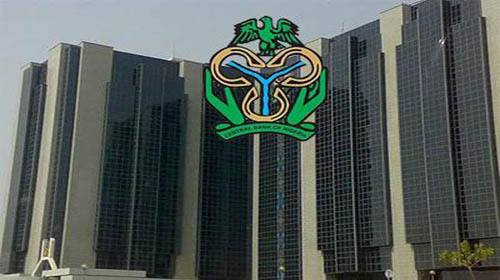
CBN building
Share





CBN retains Interest rate at 26.5% amid Middle East tensions
By Chioma ObinagwamNigeria’s apex bank has kept its benchmark interest rate unchanged, choosing caution over easing as global oil markets reel from renewed...

MIHAS 2026: Malaysia woos Nigeria into $3.5trn Halal Market
MATRADE targets more Nigerian and West African participation in $3.5 trillion global Halal economyBy Chioma ObinagwamThe Malaysia External Trade Development Corporation (MATRADE) has...
Related Articles
MIHAS 2026: Malaysia woos Nigeria into $3.5trn Halal Market
MATRADE targets more Nigerian and West African participation in $3.5 trillion global...
Malaysia’s exports to Nigeria surge 20.7% to $664m in 2025
By Chioma ObinagwamMalaysia’s exports to Nigeria climbed 20.7 percent in 2025 to...

Heritage Bank and Dangerous Politics of Corporate Survival in Nigeria
By Blaise UdunzeThe Heritage Bank’s banking license was revoked and it was...



NCDMB, renaissance begin field readiness training for 300 Nigerians
Three hundred young Nigerians have begun a rigorous 12-month journey to industry-ready...

Leave a comment