



Lagos State, Nigeria’s commercial hub, generates approximately 870,000 tonnes of plastic waste annually, contributing significantly to the country’s 2.5 million tonnes of plastic waste.
To address this environmental challenge, Confiance News learnt that the Lagos State Government has implemented bold measures to curb plastic pollution, aligning with the World Environment Day 2025 theme, “Putting an End to Plastic Pollution.” This theme emphasizes global action to eliminate plastic waste by 2040, a goal Lagos is actively pursuing.
In January 2024, Lagos announced a ban on single-use plastics and Styrofoam, with a full enforcement set for July 1, 2025.
The ban targets non-biodegradable materials like Styrofoam, which clog drainage systems and exacerbate flooding, a persistent issue in the coastal city. The state has engaged in 18 months of dialogue with stakeholders to ensure a smooth transition, promoting biodegradable alternatives and public awareness campaigns to shift consumer behaviour.
Lagos has also partnered with organizations like the United Nations Industrial Development Organization (UNIDO) to promote a circular economy. A 2023 workshop themed “Promoting Sustainable Plastic Value Chain through Circular Economy Practices” emphasized recycling, waste sorting, and reducing single-use plastics. Additionally, initiatives like Project ReflexNG, launched with Dow and RecyclePoints, aim to divert 300 million plastic water sachets from landfills by employing waste pickers and establishing recycling kiosks.
These efforts align with the 2025 World Environment Day theme by prioritizing sustainable waste management and reducing plastic pollution’s impact on ecosystems and public health.
By fostering recycling, enforcing bans, and promoting alternatives, Lagos is taking decisive steps toward a cleaner environment, contributing to global goals for a plastic-free future. However, effective enforcement and infrastructure development remain critical to sustaining these efforts.
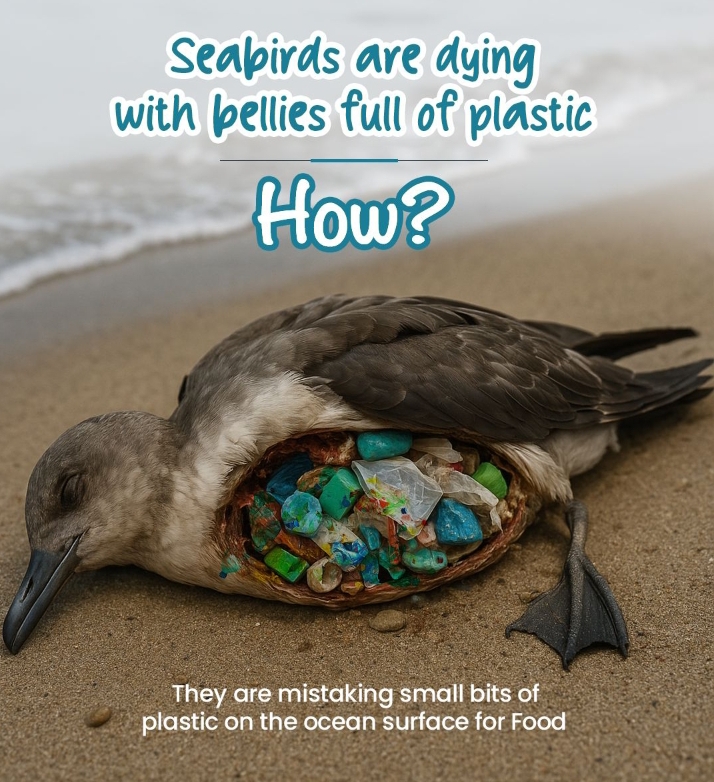
Cover Photo: A seabird with plastic wastes in its stomach. Photo credit: Digital India. Source: X.








Leave a comment