


By Chioma Obinagwam
As conversations on finding sustainable solutions for a decarbonized energy future continue to hold globally, the Group Chief Executive Officer (GCEO), NNPC Ltd., Mr. Mele Kyari has said the African Continent needs “a just, differentiated transition” to enable it to harness its resources for today for the benefit of its future generations.
The GCEO made this known while speaking at a Regional CEO Panel organised by McKinsey & Company on the sidelines of the ongoing United Nations Conference on Climate Change (UNCCC), also known as the COP28 Conference, in Dubai, UAE, on Monday.
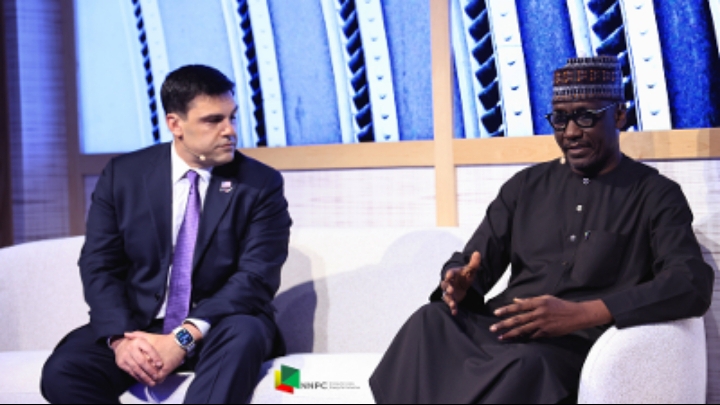
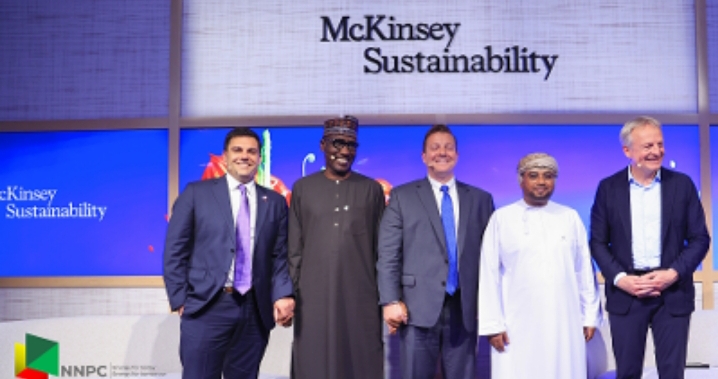
The GCEO, who joined other global energy leaders from the United States, Holland, and Oman to highlight energy perspectives and insights on the evolving energy market, said the world must understand Africa’s peculiarities in addressing the effects of climate change on energy businesses.
“I have always advocated for a differentiated and just energy transition. In Africa, we have different circumstances compared to other places in the world.
In Africa today, 75% of our population doesn’t have access to electricity, leaving us with biomass as a key energy source. The world needs to recognize that the most practicable thing today is to substitute what we have in the short term to close the energy gap for our rising population,” he stated.
gathered that Nigeria being forecasted to be among the global top 10 economies by 2035 and 3rd in terms of the global population by the same year, the GCEO said it is critical that the energy poverty question be discussed as nations unite to achieve net zero by 2050.
According to the GCEO, with abundant natural gas reserves of 206 trillion cubic feet (tcf) that have the potential to rise to 600tcf, Nigeria is currently utilizing gas to drive its journey towards energy transition.
He said that NNPC Ltd. is creating a regional gas pipeline network to supply natural gas across the African continent and boost its Liquefied Natural Gas (LNG) supply to the foreign market.
Explaining that NNPC Ltd. is currently eliminating gas flares in almost all its gas projects, Kyari said the idea is to deploy such gas towards developing power plants nationwide, which will boost nationwide electricity supply, create employment opportunities, and trigger the nation’s industrial and economic development.
He said that to demonstrate NNPC Ltd’s commitment to a net-zero future by 2025, the Company recently signed up as a participant in the United Nations Global Compact in New York, becoming the first state-owned oil company to join the global initiative.






Leave a comment