



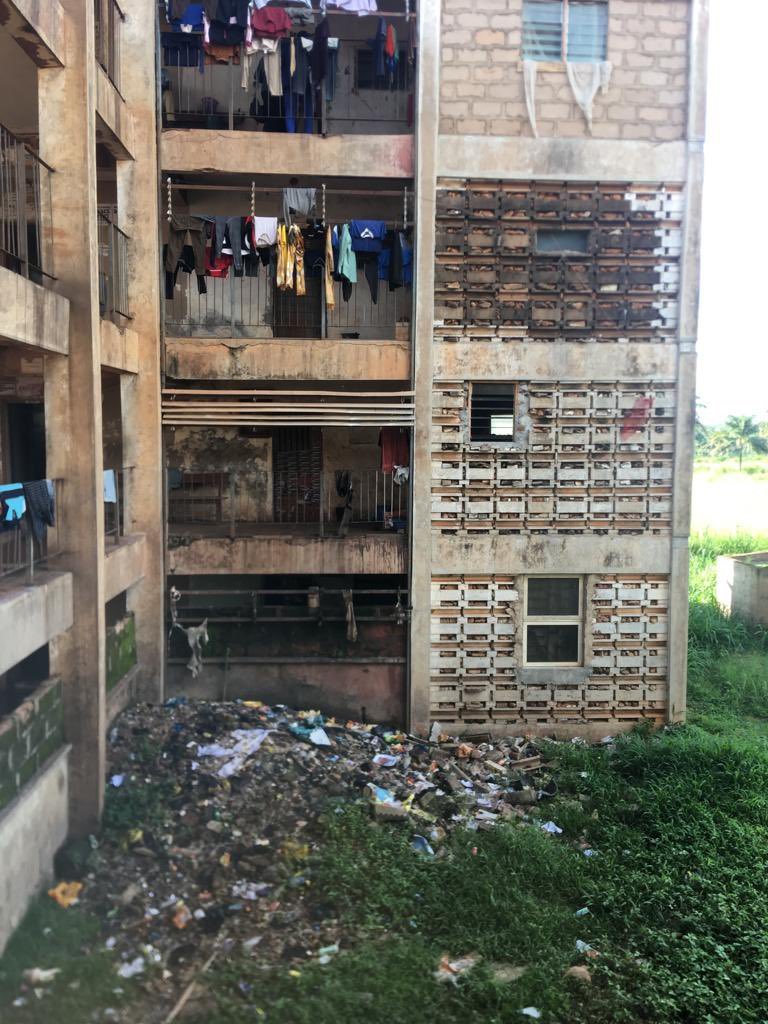
When visually impaired UNN student Nnamdi Daniel filmed the hazardous conditions inside Alvan Ikoku Hostel, he expected repairs. Instead, he got eviction. His story has cracked open a wider scandal of decaying infrastructure, billions in unaccounted funds, and an administration more invested in silencing critics than fixing the crisis they expose. In this exposé, Confiance News amplifies the voices being suppressed and demands transparent action from all stakeholders.
By Joan Chioma Obinagwam
A visually impaired student at the University of Nigeria, Nsukka, dared to expose the shocking state of campus hostels. Hours later, he faced eviction. This incident has ignited fierce public outrage over student welfare, fund accountability, and administrative heavy-handedness at one of Nigeria’s premier institutions.
Dire hostel conditions
Nnamdi Daniel, a 300-level Political Science student who is visually impaired, lived in Alvan Ikoku Hostel. He described flooded balconies, piles of trash, exposed electrical wires, filthy bathrooms, and overwhelming odors that make daily life hazardous, especially for students with disabilities.
Daniel highlighted how these conditions pose unique risks for the visually impaired. Navigation becomes dangerous amid clutter and poor maintenance. Basic hygiene turns into a constant struggle. His viral video on Afia TV captured the reality many students endure despite paying accommodation fees.
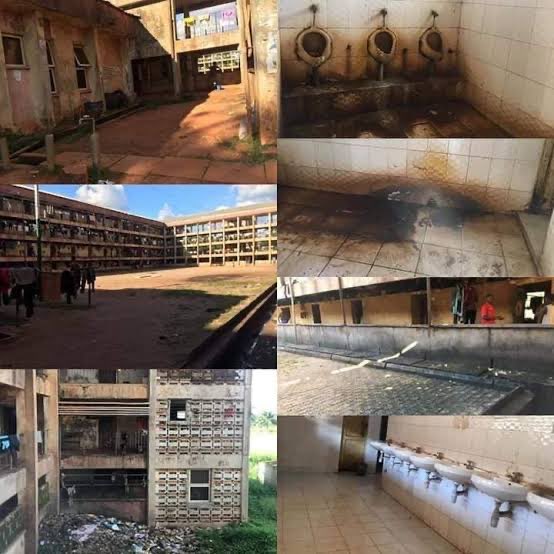
Inside the UNN hostel where visually impaired Nnamdi Daniel lived and was subsequently evicted. Photo credit: unnstudentz. Source: X.
Alumni and current students echo these complaints. Emma Onyenso, an alumnus stated on his X handle, “There’s no differences between these pictures and the ones I took while I was still an undergraduate in 2018.” Another former resident,Mazi Nonso, shared lasting trauma: “I still have trauma from living in Akintola Hall for four years even after more than two decades of graduating.”
Photos and videos circulating online show cracked walls, overcrowded rooms with an average of four students per space, broken facilities, and unsanitary toilets. These images paint a picture far removed from the standards expected in a federal university.
Retaliation instead of reform
Rather than address the issues raised, university authorities allegedly targeted the messenger. Daniel was reportedly evicted from his hostel on the orders of Prof. Adibe Agbo, Director of Housing and Accommodation. Sources link the eviction directly to his public comments about the deteriorating living conditions and the specific challenges faced by visually impaired students.
The situation escalated further when Afia TV correspondent Elijah Akuma and his cameraman visited Alvan Ikoku Hostel for a follow-up. UNN security arrested them shortly after, accusing the team of “sneaking in” and trespassing. The UNN Chief Security Officer and Dr. Adibe Agbo were reportedly involved in the confrontation. The journalists remained in detention for hours.
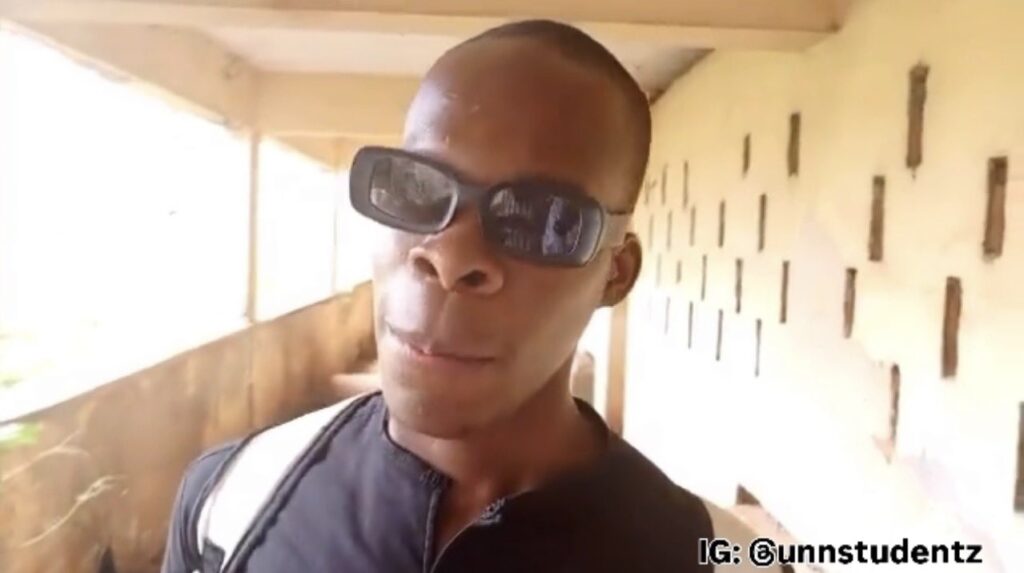
Visually impaired Nnamdi Daniel. Photo credit: unnstudentz. Source: X.
Public Relations Officer Mr. Agha Egwu Inya defended the hostels during a television appearance. He claimed the university fumigates rooms at the end of every session and blamed students for bringing bedbugs. Inya suggested that critics like Alex Onyia were “demarketing” the alma mater and that the viral videos did not reflect the true state of many hostels.
Alex Onyia pushed back strongly. “Look at the UNN male hostel Mr. Agha Egwu Inya (UNN PRO) said it’s clean. He further said that i’m demarketing my alma mater. He said students are the ones that brings the bed bugs to the school. Our students can’t continue to live in this mess anymore. It must stop!”
Billions in funds, persistent decay
Stakeholders question how such conditions persist despite significant funding. Tracka (@trackang) highlighted government allocations: “Did you know that beyond the N44,000 hostel accommodation and allocation fee reportedly paid by each student, the Federal Government also disbursed a total of N594.6m between 2022–2025 for hostel-related projects in the university, largely for rehabilitation and a few construction works? In 2025 alone, a total sum of N125.79m was paid for the same purpose.”
The activist raised pointed questions: Which hostels were rehabilitated? What exact work was done? Which contractors received these funds? Were the projects completed to standard? Why does accommodation pressure and poor conditions remain common?
”Public education funds must translate into decent living conditions, safe hostels, and better welfare for students,” Tracka emphasized. The group published details of allocations to encourage transparency from all stakeholders.
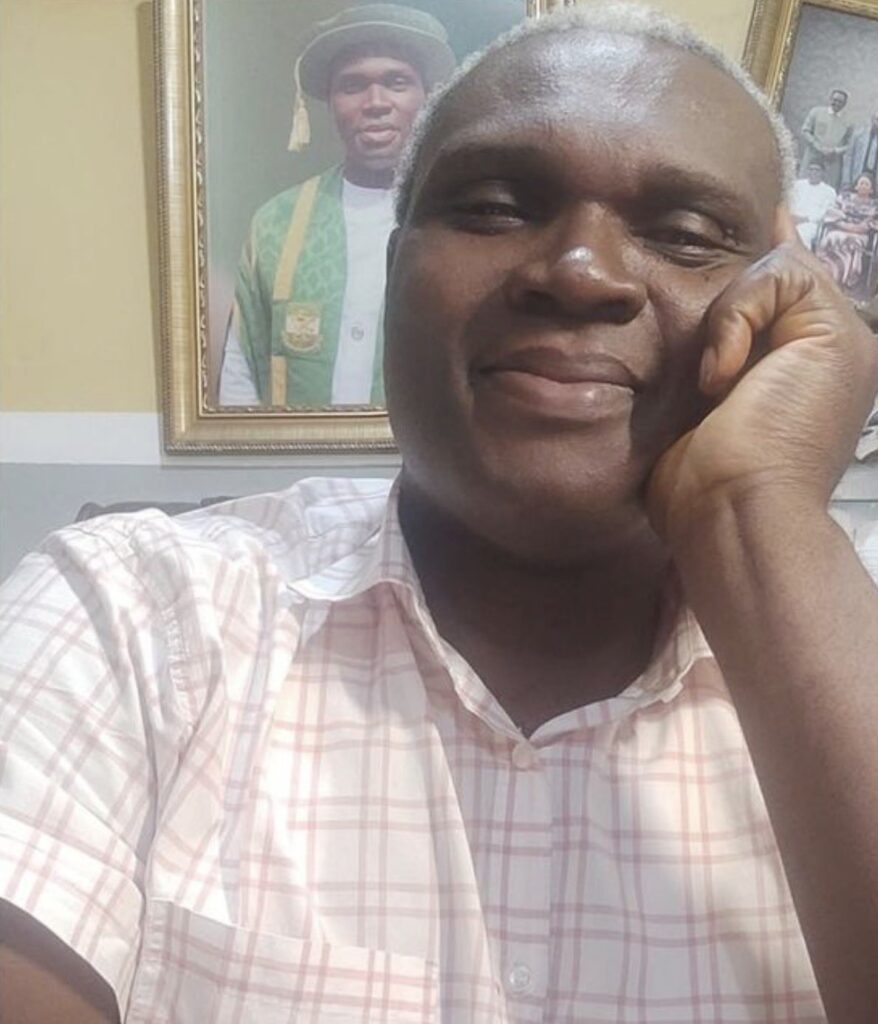
Prof Adibe Agbo, the Director of Housing and Accommodation. Photo credit: unnstudentz. Source: X.
Critics suggest systemic sabotage or mismanagement. One X user observed, “Dont be surprised he has so many beautiful lodges within that school location. Most times, individual employed as government workers intentionally sabotage government property for their own to scale through. If you doubt me, investigate private doctors in government hospitals.”
Public outrage
Social media users expressed deep disappointment in UNN leadership. Fortis (@Fortis1o) asked, “So the UNN is now run by a terror network? Is it no longer supposed to be a place for critical thinkers to be raised and taught? What is this VC and his band of serpentine lieutenants doing to that university?”
Mayor of Orlu (@akachukwu_henry) urged immediate action: “The lions and lionesses indeed. They are gradually dragging themselves to the mud. Of all the professors and learned persons they claim to have produced, none could advise them on how to handle matters of the public like this one? Ahhhhh…..the VC should find out if the governing councils are even working for the success of his tenure. Public perception is 💯 valid, especially with evidences provided so far! All you needed to do is swing into action, apologise to the public for negligence overtime and fix your problem! I hope they can handle whats coming.”
unnstudentz pointed fingers at the housing director: “This is Prof Adibe Agbo, the Director of Housing and Accommodation. He reportedly choose to victimize the visually impaired student Nnamdi Daniel who spoke about the deteriorating living conditions of students than fixing the hostels which he is in charge of its allocation.”
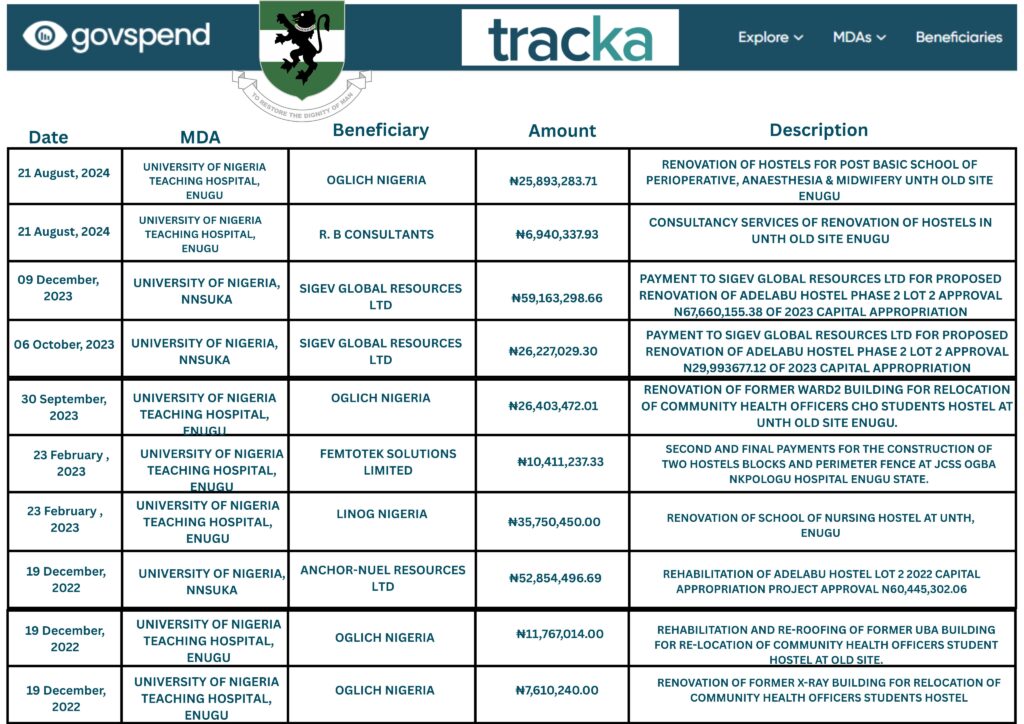
Screenshot of funds disbursement for UNN hostel projects. Photo credit: Tracka. Source: X
Many users highlighted the irony and failure of turning a blind eye, literally and figuratively, to problems that even a visually impaired student could clearly perceive through lived experience.
Impact on students with disabilities
The eviction of Nnamdi Daniel underscores broader failures in inclusive education. Visually impaired students already navigate extra barriers. Poor hostel infrastructure, lack of tactile guides, unsafe pathways, and unsanitary shared facilities compound these challenges. Overcrowding reduces privacy and heightens risks of accidents or health issues.
Advocates argue that university management must prioritize accessibility. Basic modifications, regular maintenance, and sensitivity training for staff could prevent such crises. Instead, the response appears punitive, sending a chilling message to other students who might consider speaking up.
Calls for accountability
This scandal raises fundamental questions about governance at public universities. With substantial federal funds released for hostel rehabilitation, stakeholders demand detailed reports on project execution, contractor performance, and quality assurance. Transparency in fund utilization is non-negotiable if public trust is to be restored.
Alumni, parents, and education watchers insist that UNN must move beyond denial. Blaming students for systemic decay or labeling critics as detractors solves nothing. Fumigation alone cannot fix structural problems like leaking roofs, faulty wiring, or chronic overcrowding.
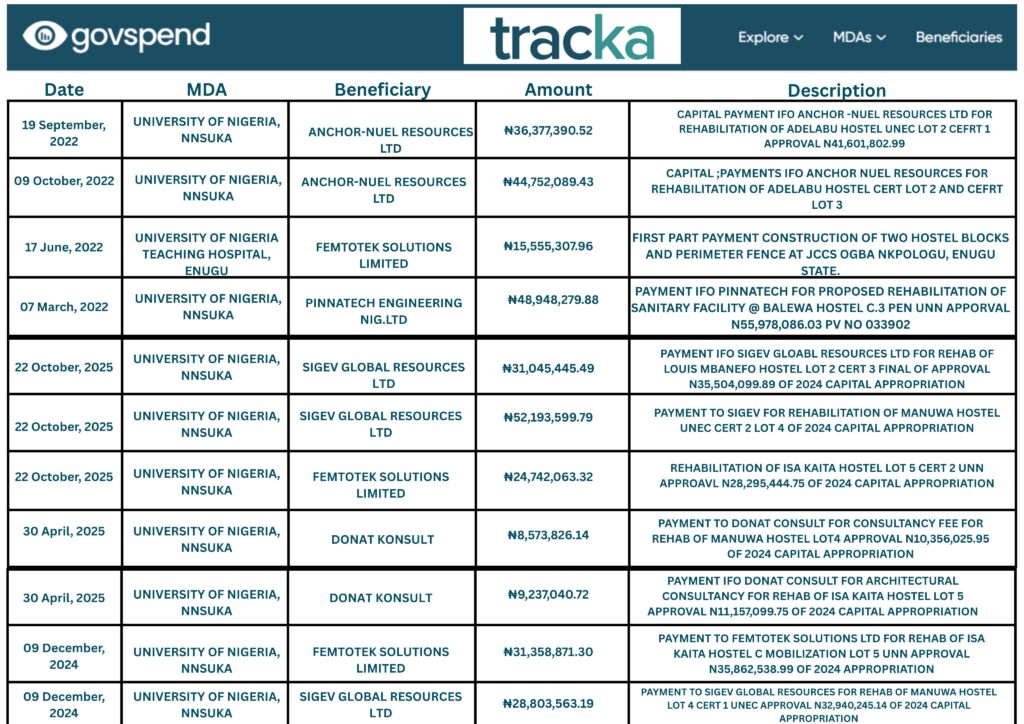
Screenshot of funds disbursement for UNN hostel projects. Photo credit: Tracka. Source: X
Actionable steps for stakeholders
University management, led by the Vice Chancellor and governing council, must immediately:
Conduct an independent audit of all hostel rehabilitation funds from 2022 to 2025. Publish which hostels received work, the scope of projects, contractors involved, and completion certificates.
Rehouse Nnamdi Daniel in suitable accommodation and issue a public apology for any perceived victimization.
Halt any intimidation of journalists or students documenting conditions. Release Elijah Akuma and his cameraman if still detained, and clarify access policies for media.
Launch urgent repairs focusing on high-impact areas: sanitation, safety features for disabled students, and reduction of overcrowding.
Establish a student welfare committee with representation from visually impaired students, SUG, and alumni to monitor progress.
The Federal Government and relevant education ministries should:
Demand full accountability reports on the N594.6 million disbursed. Withhold future releases until verifiable improvements occur.
Enforce standards for student accommodation in all federal universities, including mandatory accessibility audits.
Support infrastructure grants tied to measurable outcomes in student living conditions.
Parents, alumni, and civil society groups can:
Pressure university leadership through petitions and town halls.
Fundraise for immediate student relief where possible, while advocating systemic change.
Use platforms like X to keep the conversation alive with evidence-based demands.
Journalists and influencers should continue responsible coverage. Amplify student voices without compromising safety, and follow up on fund tracking.
Students themselves hold power through organized, peaceful advocacy. The Students Union Government must represent welfare concerns constructively while documenting issues.
Nnamdi Daniel’s courage has spotlighted a crisis long ignored. Decent hostels are not a luxury; they are essential for learning, health, and dignity. Public universities exist to nurture talent, not subject young Nigerians to squalor.
For Nigeria’s higher education to thrive, public funds must deliver results. Hostels must become safe, clean spaces that support all students, including those with disabilities. Leadership must choose reform over retaliation.
The coming days will test UNN’s commitment to excellence. Stakeholders across the board, from the Vice Chancellor to federal authorities and the student body, have a duty to act. Transparency, repairs, and genuine inclusion offer the only path forward. Students deserve better. Nigeria’s future leaders cannot train in conditions unfit for human habitation.







Leave a comment