


By Chioma Obinagwam
For Nigeria to attain optimum tax revenue collection capacity across the Federal, States and Local Government tax authorities, the country must make hard but necessary reforms that would yield long term benefits.
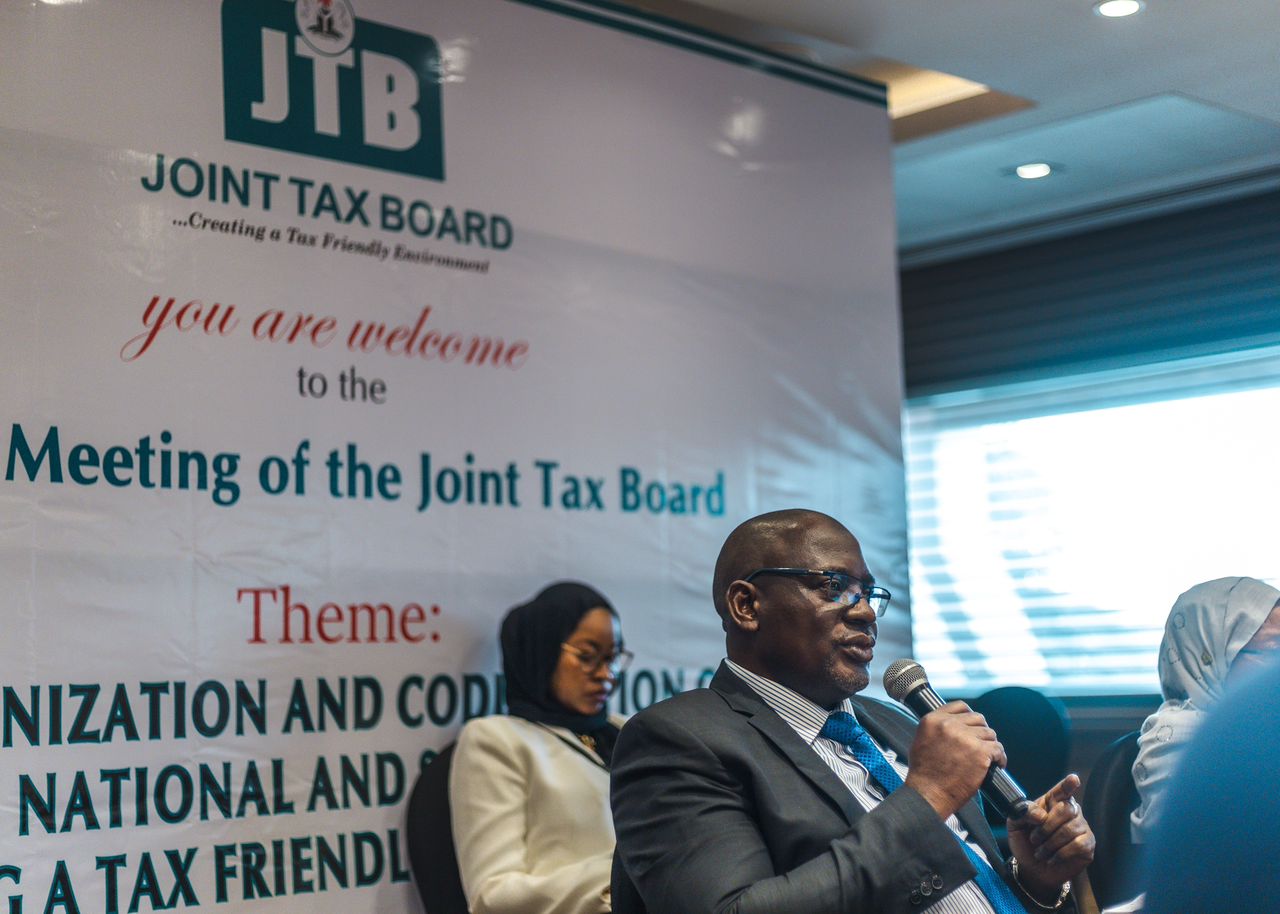
This was the position stated by the Chairman of the Joint Tax Board (JTB), Mr. Muhammad Nami, who is also the Executive Chairman of the Federal Inland Revenue Service (FIRS) at the 153rd Meeting of the Board which held today in Abuja with the theme: “Harmonization and codification of taxes at the National and Sub-national levels: Key to achieving a tax friendly environment in Nigeria.”
Confiance News gathered that Mr. Nami, while delivering his address to the Board stated that for progress to be made in taxation, tax authorities must continue to explore and adopt measures and innovative initiatives that will lead to the optimisation of tax revenue for all levels of government.
“As the new administrations attempt to address the many socioeconomic challenges facing the nation on many fronts, it becomes imperative for all the levers of State to shake-off any lethargic antecedents and focus on the goal of a national resurgence.
“The unique and privileged offices we occupy as drivers of the nation’s tax administration processes presents us with a rare opportunity to take hard, but necessary decisions that are expected to yield long term benefits and add immense value to our collective prosperity as a nation.
“In recent years, especially since the dawn of our current democratic dispensation, the importance of taxation has continued to be reiterated and reinforced by all, and the critical role that tax-revenue plays in funding government and governance cannot be over-emphasized.
“However, as we continue to make progress in our unique model of taxation, it is appropriate that we continue to explore and adopt measures and innovative initiatives that will lead to the optimization of tax revenue for all the levels of government, in more efficient, more effective, more inclusive, and more sustainable ways.
“It is only by achieving this, that our efforts as tax administrators can trigger the manner of activity required in the productive sectors of our economy, towards achieving the immense economic potentials that we are capable of,” Mr. Nami said.
The Chairman of the Joint Tax Board further assured Executive Chairmen of State Revenue Authorities present that given the thrust of the current administration’s tax policy direction, the country was on the pathway to eradicating multiplicity of taxes as a core of its overall economic regeneration objectives.
Mr. Taiwo Oyedele, Chairman, Presidential Fiscal Policy & Tax Reforms Committee, while delivering a presentation on the theme of the meeting highlighted that multiple taxation was causing low tax morale in the country, as well as discouraging investments, while creating room for corruption and making doing business difficult.
The Presidential Fiscal Policy and Tax Reforms Committee Chairman further noted that the solution to the country’s revenue challenges is not to introduce more taxes, but to focus on the few taxes that are high yielding, noting that with these, tax authorities would be able to collect far more than is currently being collected.
Mr. Taiwo stated that for the government to raise more revenue, it needed to get to a point where the total number of taxes collected at the Federal, State and Local government levels would be at a single digit.
“We also need to clarify on taxing rights. We need to integrate tax collection functions—that is, all revenues that are to be collected must be collected by a single revenue agency. Government must also do well to fund our tax agencies well. We also need to harmonise revenue administration and simplify our approach to tax compliance,” Mr. Taiwo stated.
He further advocated for the country’s tax authorities to use more technology, review the country’s constitution and tax laws, as well revisit Nigeria’s concept of fiscal federalism.






Leave a comment