



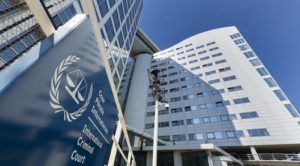
The International Criminal Court(ICC) was established by the Rome Statute in 1998 and took effect in 2002 after being ratified by 60 States.
In addition to founding the Court and defining the crimes of genocide, war crimes, crimes against humanity, and – as of amendments made in 2010 – the crime of aggression, the Rome Statute also sets new standards for victims’ representation in the Courtroom, and ensures fair trials and the rights of the defence. The Court seeks global cooperation to protect all people from the crimes codified in the Rome Statute.
Today the treaty serves as the ICC’s guiding legal instrument, which is elaborated in such other legal texts as the Elements of Crimes, Rules of Procedure and Evidence and more.
The International Criminal Court (ICC) investigates and, where warranted, tries individuals charged with the gravest crimes of concern to the international community: genocide, war crimes, crimes against humanity and the crime of aggression.
The Court is participating in a global fight to end impunity, and through international criminal justice, the Court aims to hold those responsible accountable for their crimes and to help prevent these crimes from happening again.
The Court cannot reach these goals alone. As a court of last resort, it seeks to complement, not replace, national Courts. Governed by an international treaty called the Rome Statute, the ICC is the world’s first permanent international criminal court.
KEY FACTS AND FIGURES
Over 900 staff members: From approximately 100 States.
6 official languages: English, French, Arabic, Chinese, Russian and Spanish.
6 field offices: Kinshasa and Bunia (Democratic Republic of the Congo, “DRC”); Kampala (Uganda); Bangui (Central African Republic, “CAR”); Nairobi (Kenya), Abidjan (Côte d’Ivoire).
2 working languages: English and French.
Headquarters: The Hague, the Netherlands.
2018 budget: €147,431,500.
There have thus far been 26 cases before the Court, with some cases having more than one suspect.
ICC judges have issued 32 arrest warrants.
9 people have been detained in the ICC detention centre and have appeared before the Court.
15 people remain at large.
Charges have been dropped against 3 people due to their deaths.
ICC judges have also issued 9 summonses to appear.
The judges have issued verdicts in 6 cases: 8 convictions and 2 acquittals.




Leave a comment