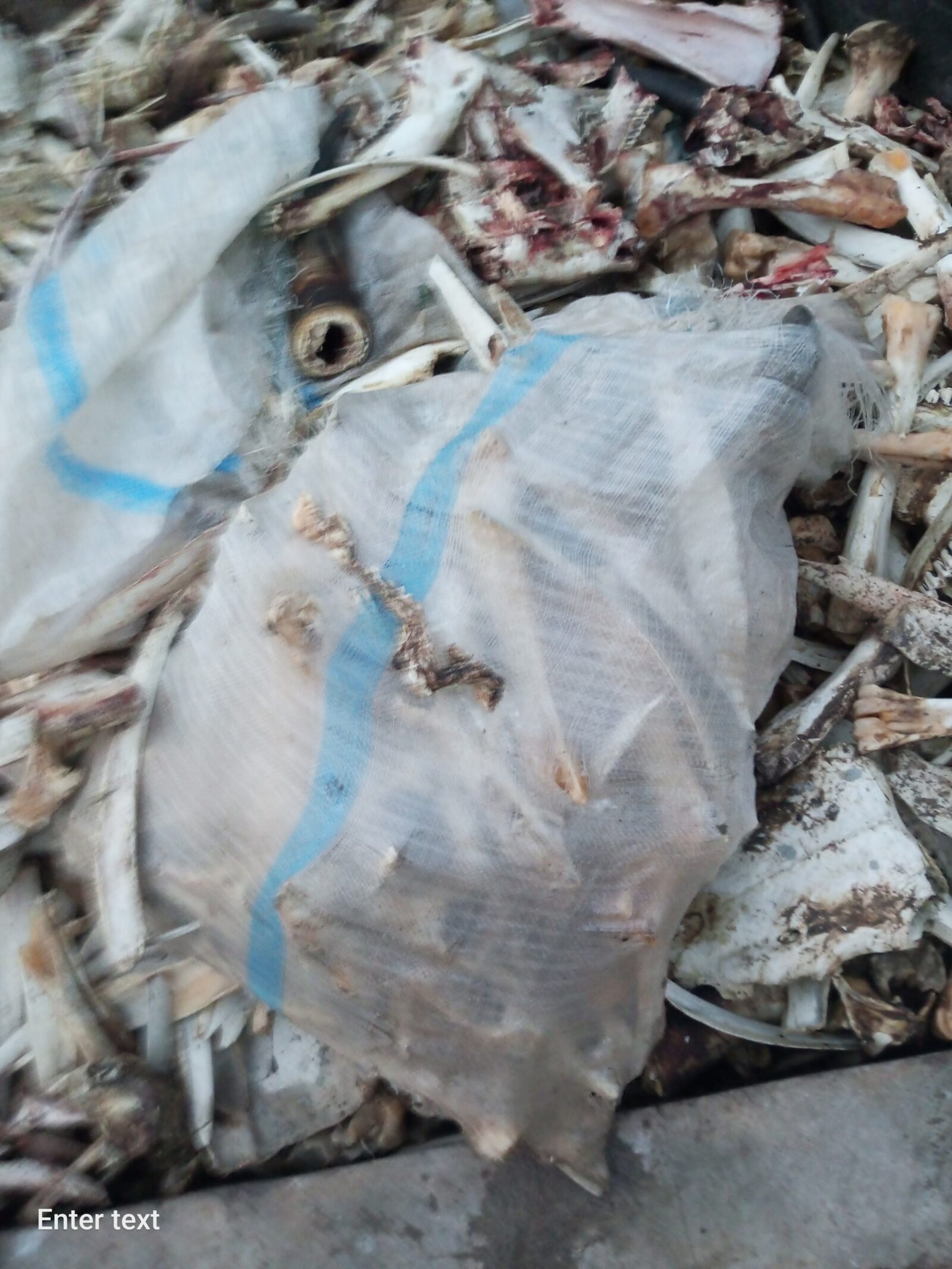
Dawn breaks over a sprawling abattoir on the outskirts of Kano. Workers move through the humid air as cattle carcasses yield their meat. Meanwhile, mountains of bones rise in the corners. Some workers kick them aside. Others set piles alight, sending acrid smoke into the morning sky. These bones once fed no one and earned almost nothing. Yet thousands of kilometres away in Dalian, China, a cargo of 747 tons of Nigerian cattle bone pellets recently cleared customs without a single duty charged. That shipment arrived under Beijing’s zero-tariff policy for 53 African countries, which took effect on 1 May 2026. The contrast could not appear starker. Nigeria sits on a resource that many still treat as worthless waste, while a vast industrial market stands ready to absorb it.
This resource forms the foundation of what may become Nigeria’s next practical goldmine: the bone economy. Cattle bones, long discarded or sold for pennies, now offer a pathway to foreign exchange, rural employment and industrial growth. China processes them into bone meal for fertiliser and animal feed, gelatin and collagen for pharmaceuticals, food and cosmetics, and bone char for filtration systems. The zero-tariff regime eliminates previous duties that ranged from 8 to 12 percent and opens green lanes with streamlined quarantine procedures. Consequently, Nigerian exporters gain immediate competitive ground. The opportunity demands attention because it converts slaughterhouse leftovers into structured economic value.
Nigeria already participates in this trade, though on a modest scale. Official figures show bone and horn-core exports under HS code 050690 reaching 1.24 million dollars in 2024 from a total volume of 2.55 million kilograms. China alone purchased 1.85 million kilograms worth 773,000 dollars that year. In 2023 the broader bone products trade climbed to about 1.74 million dollars. Earlier tallies recorded even larger volumes in some years, yet unit prices stayed low. The zero-tariff policy changes the arithmetic. Ambassador Yu Dunhai stated that Nigeria’s annual export of approximately 7,000 tons of cattle bone granules can now save nearly 450,000 dollars in duties. A single early shipment of 747 tons demonstrated that the policy works in practice. Broader trade numbers reinforce the shift. Nigeria-China bilateral trade climbed to 18 billion dollars in the first half of 2026, a 35 percent year-on-year rise. Chinese imports from Nigeria surged 80 percent to 2.3 billion dollars, with monthly growth exceeding 40 percent in both May and June. Bones form only a fraction of that growth, yet they illustrate how preferential access can lift overlooked commodities.
China’s appetite for bones stems from clear industrial needs. Processors grind them into phosphorus-rich bone meal that strengthens soil and supplements livestock, poultry and fish feed. Other factories extract gelatin for capsules, gummies and cosmetic products. Still others produce bone char that purifies water and refines sugar. Global demand for these derivatives runs into the billions of dollars. Brazil and Argentina have long treated bones as serious export commodities alongside meat. Nigeria possesses one of Africa’s largest cattle herds, estimated at roughly 20.9 million head. Daily slaughter in cities such as Kano, Lagos and Ibadan therefore generates steady volumes of by-product. Collectors who once earned almost nothing can now aggregate, clean and crush bones into pellets or granules that meet Chinese specifications. Strong verbs describe the potential transformation: workers harvest the bones, processors pulverise them, and exporters dispatch containers that return hard currency.
Yet the value chain remains incomplete. Most Nigerian bones still leave the country in raw or minimally processed form. Local feed manufacturers sometimes import bone meal even while domestic supplies sit unused. The gap between current practice and full potential invites both opportunity and frustration. Entrepreneurs must first register with the Nigerian Export Promotion Council. They then secure veterinary health certificates from the Department of Veterinary and Pest Control Services and notify the Nigerian Agricultural Quarantine Service before shipment. China requires heat treatment, typically around 80 degrees Celsius for a minimum period, plus compliance with General Administration of Customs registration. These steps sound straightforward on paper. In reality they demand capital, consistency and patience. Certification costs have risen sharply in some cases, occasionally exceeding 1.25 million naira per consignment because officials travel from Abuja for inspections. Quality and traceability also present hurdles. Buyers reject shipments that contain moisture, pests or foreign matter. Therefore successful players invest in drying yards, simple grinding equipment and careful record-keeping.
Human stories animate these mechanics. In the same Kano abattoir, a middle-aged collector named Musa once sold occasional bags of bones for pocket money. After the zero-tariff announcement, he organised fellow workers into a small cooperative. They clean the bones more thoroughly, dry them under the sun, and crush them into uniform chips. Musa speaks with quiet determination when he describes the change. “We used to burn what we could not sell. Now we measure, bag and wait for the truck.” Similar groups have formed around other slaughterhouses. Young people who previously saw no future in by-products now calculate margins and search for Chinese buyers online. Their energy contrasts with the caution of established traders who remember earlier bureaucratic delays. Both groups recognise that the market rewards reliability more than volume alone.
Critics raise valid concerns. Some Nigerians argue that exporting raw bones simply repeats the familiar pattern of shipping unprocessed commodities while foreigners capture the higher value. They urge the government and private investors to build local gelatin and bone-meal factories that would create more jobs and retain greater earnings. Others warn that aggressive collection could reduce supplies available for domestic fertiliser or feed. These voices deserve attention. Raw export under zero tariffs serves best as a bridge rather than a final destination. Cash flow from early shipments can finance the very processing capacity that critics demand. Public-private partnerships can establish aggregation hubs near major abattoirs and train workers in hygiene and quality standards. Streamlined veterinary procedures would lower costs and speed clearances. Development banks and the Nigerian Export Promotion Council can de-risk initial investments through guarantees and market-linkage support.
The broader economic stakes remain modest yet meaningful. Bone exports will never rival oil or even sesame in absolute contribution to GDP. Their current scale sits in the low millions of dollars. Nevertheless they offer high marginal impact in rural communities where formal employment stays scarce. Every container that leaves a Nigerian port carries not only bones but also wages for collectors, payments to transporters and lessons in international standards. The zero-tariff window provides a clear timeframe in which to prove the model. If Nigeria seizes it, the bone economy can expand into a recognised non-oil sector that supplies both foreign markets and domestic industries.
Evening settles again over the Kano abattoir. The smoke from burning piles has diminished. Instead, workers load dried bone chips onto a waiting truck. The vehicle will head toward a port where a container eventually sails for China. That journey converts yesterday’s waste into today’s revenue and tomorrow’s possibility. Nigeria has long extracted value from its soil and its crude. It can now extract value from what its livestock leave behind. The bone economy will not transform the nation overnight. Yet it can teach a durable lesson: opportunity often hides in the places people have learned to ignore. Those who collect, process and export with discipline will turn that lesson into lasting gain.



Business & Economy
 Chioma ObinagwamOctober 28, 20265 Mins read21
Nigeria’s next goldmine: The bone economy
 Chioma ObinagwamOctober 28, 20265 Mins read21
Share


Related Articles

Business & Economy Chioma Obinagwam2 Mins read
FMDQ Group honours 25 winners at 2026 GOLD Awards
· FMDQ Group has crowned 25 winners at its 9th GOLD Awards,...
Chioma Obinagwam2 Mins read
Business & Economy Chioma Obinagwam4 Mins read
The Unacceptable Naira Notes That Divided A Market
Ummie KabirAt Yaba Market on a busy Tuesday morning, a woman selling...
Chioma Obinagwam4 Mins read
Business & Economy Chioma Obinagwam2 Mins read
ARM Investment Managers lists ₦10bn private debt fund on FMDQ
• ARM Investment Managers has secured a ₦10bn private debt fund...
Chioma Obinagwam2 Mins read



Business & Economy Chioma Obinagwam3 Mins read
𝗦𝗲𝗽𝗹𝗮𝘁 𝗘𝗻𝗲𝗿𝗴𝘆 𝗽𝗿𝗼𝗳𝗶𝘁 𝗷𝘂𝗺𝗽𝘀 𝟭𝟳𝟰 𝗽𝗲𝗿𝗰𝗲𝗻𝘁, 𝗱𝗶𝘃𝗶𝗱𝗲𝗻𝗱 𝗿𝗶𝘀𝗲𝘀 𝟱8%
𝗛𝗶𝗴𝗵𝗲𝗿 𝗼𝗶𝗹 𝗽𝗿𝗶𝗰𝗲𝘀, 𝗿𝗲𝗰𝗼𝗿𝗱 𝗴𝗮𝘀 𝗼𝘂𝘁𝗽𝘂𝘁 𝗮𝗻𝗱 𝗹𝗼𝘄𝗲𝗿 𝗱𝗲𝗯𝘁 𝗹𝗶𝗳𝘁 𝗦𝗲𝗽𝗹𝗮𝘁’𝘀 𝗻𝗶𝗻𝗲-𝗺𝗼𝗻𝘁𝗵...
Chioma Obinagwam3 Mins read

Leave a comment