



By Chioma Obinagwam
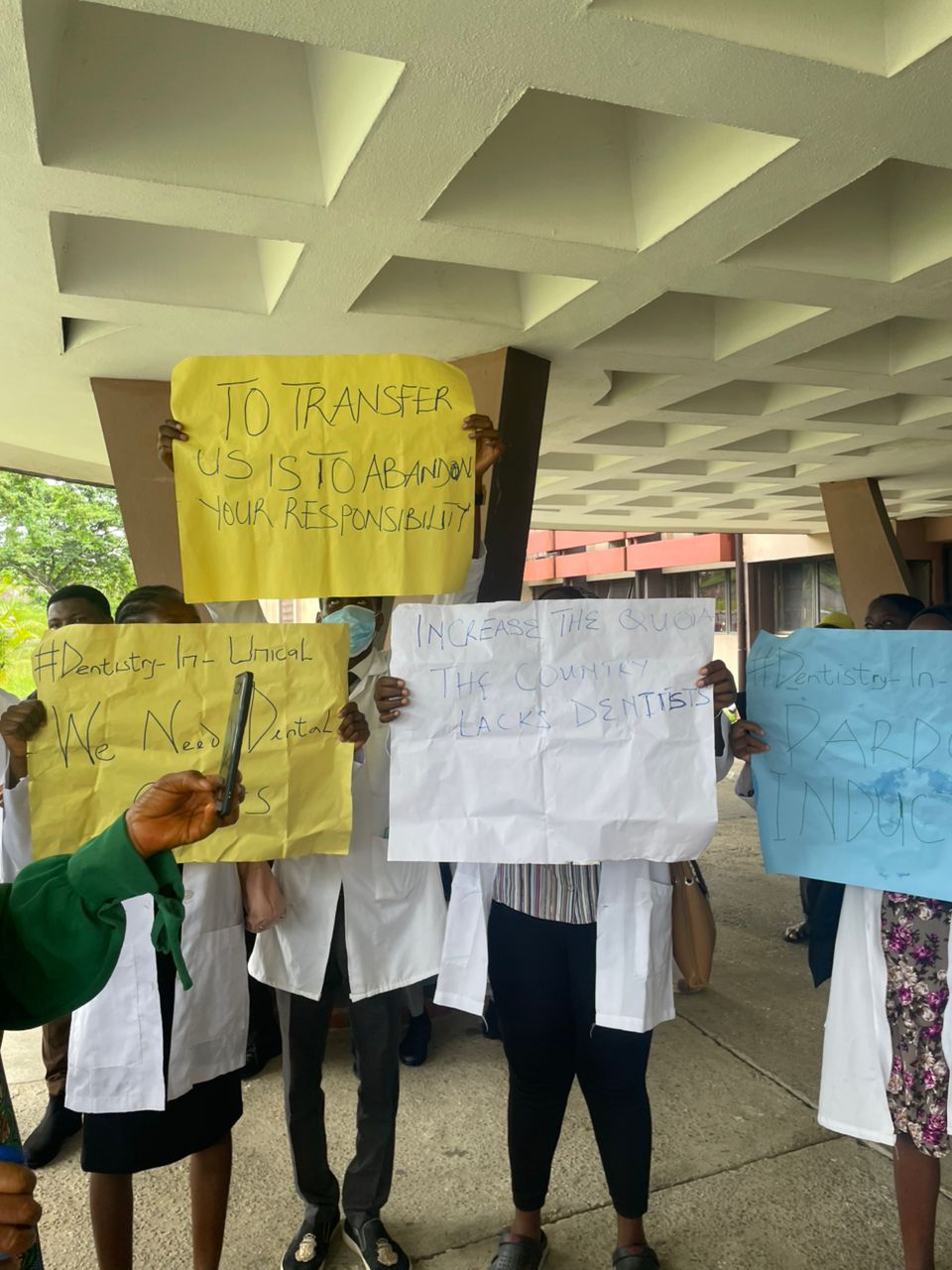
Over 300 dental students at the University of Calabar (UNICAL) are grappling with a devastating crisis after the Medical and Dental Council of Nigeria (MDCN) revoked the Faculty of Dentistry and Dental Surgery’s accreditation. The root cause: UNICAL’s over-admission, enrolling up to 90 students against the MDCN’s approved quota of 10 annually. Students from 200 to 600 levels face uncertain futures, with some reportedly told to transfer or “learn a trade.” This administrative failure has sparked outrage, legal debates, and calls for justice.
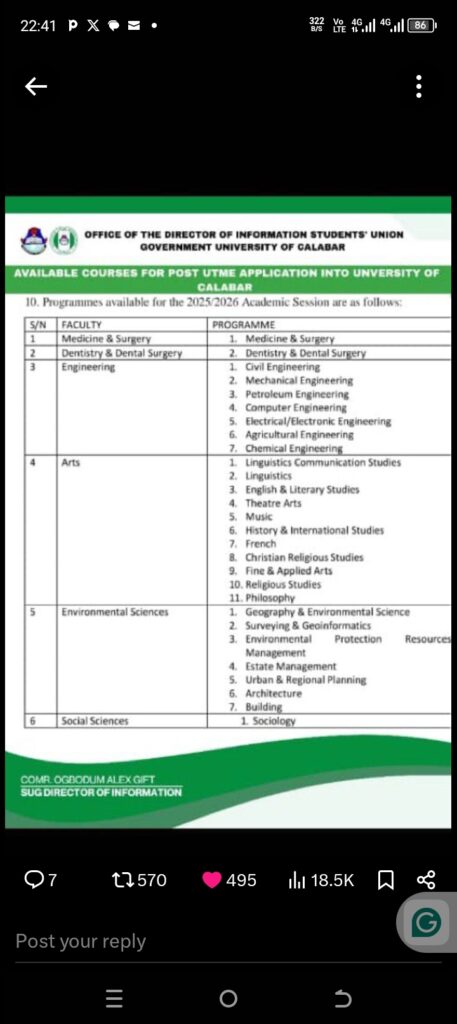
Confiance News gathered that a popular X user @OurFavOnlineDoc has been a vocal advocate, amplifying the students’ plight. In a post on X, he stated, “The injustice done today to the dentistry students in University of Calabar can happen to any other students… That a university loses accreditation is NOT the student’s problem.” He further warned 2025/2026 post-UTME applicants, tweeting, “If you are seeking admission into UNICAL, be very careful. The dental students’ crisis is not an isolated case—engineering, pharmacy, and mass comm have faced similar issues.” His posts highlight a pattern of mismanagement at UNICAL, urging prospective students to reconsider their choices.
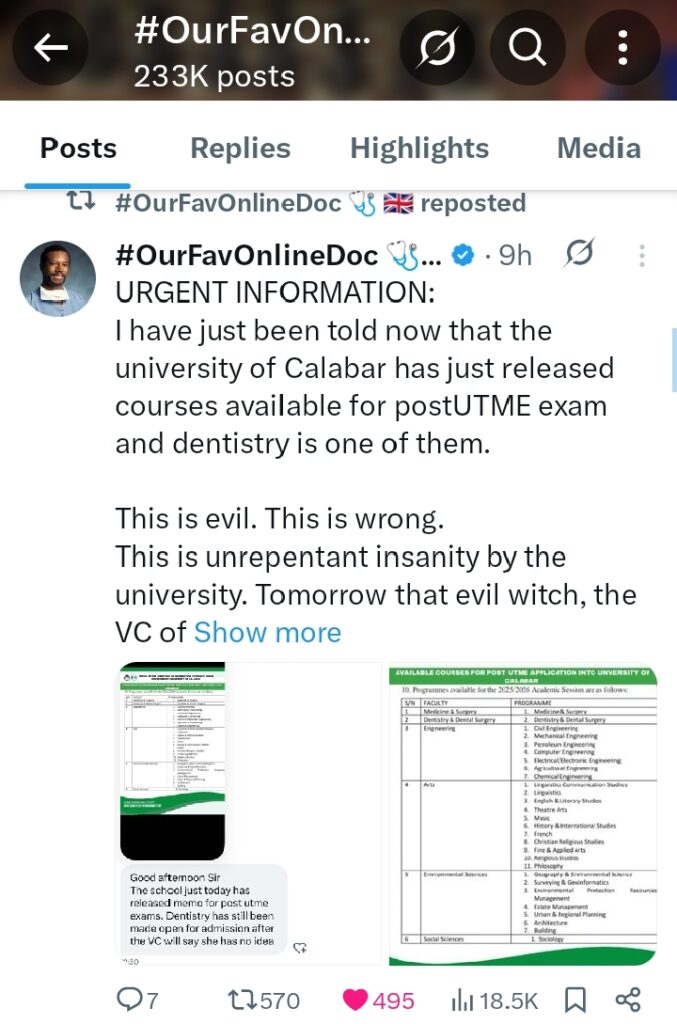
OurFavOnlineDoc. Source: X.
The Federal Minister of Education, Dr. Tunji Alausa, has been pressed to intervene. While no direct response from Alausa is recorded, THISDAY newspaper reported, “The Honourable Minister of Education, Dr. Tunji Alausa, must wade into this matter and ensure these students are not made to suffer for the university’s errors.” The Minister of State for Education and the National Universities Commission (NUC) have also been called to act. The Nigerian Association of Dental Students (NADS) condemned UNICAL’s actions, stating, “The directive to transfer or learn a trade is inhuman and unacceptable”. The NUC, responsible for accreditation oversight, has yet to issue a public response, but its role in enforcing compliance is critical.
This crisis violates students’ rights under Section 18 of the Nigerian Constitution, which mandates equal access to education, and Section 42, which prohibits discriminatory treatment. Legal expert Dr. Chidi Okafor argues, “UNICAL’s actions are unconstitutional. Students can sue for breach of contract and violation of their rights under Sections 18 and 42″. He cites the principle of estoppel, noting, “Having admitted these students and collected fees, UNICAL cannot disclaim responsibility.” Okafor advises a class-action lawsuit seeking reinstatement, compensation, and a court-ordered resolution.
To secure justice, students should act swiftly. They should rally under the Students’ Union Government (SUG), which demanded, “Immediate reinstatement and a halt to forced transfers.”
Confiance News gathered that the students should hire legal counsel to file a lawsuit, leveraging constitutional protections. More so, ongoing protests, like those outside the Vice Chancellor’s office, and social media campaigns can sustain pressure. Furthermore, activist Dr. Anthony Ude suggests, “Petition the MDCN and NUC for a special quota or facilitated transfers to accredited schools”.
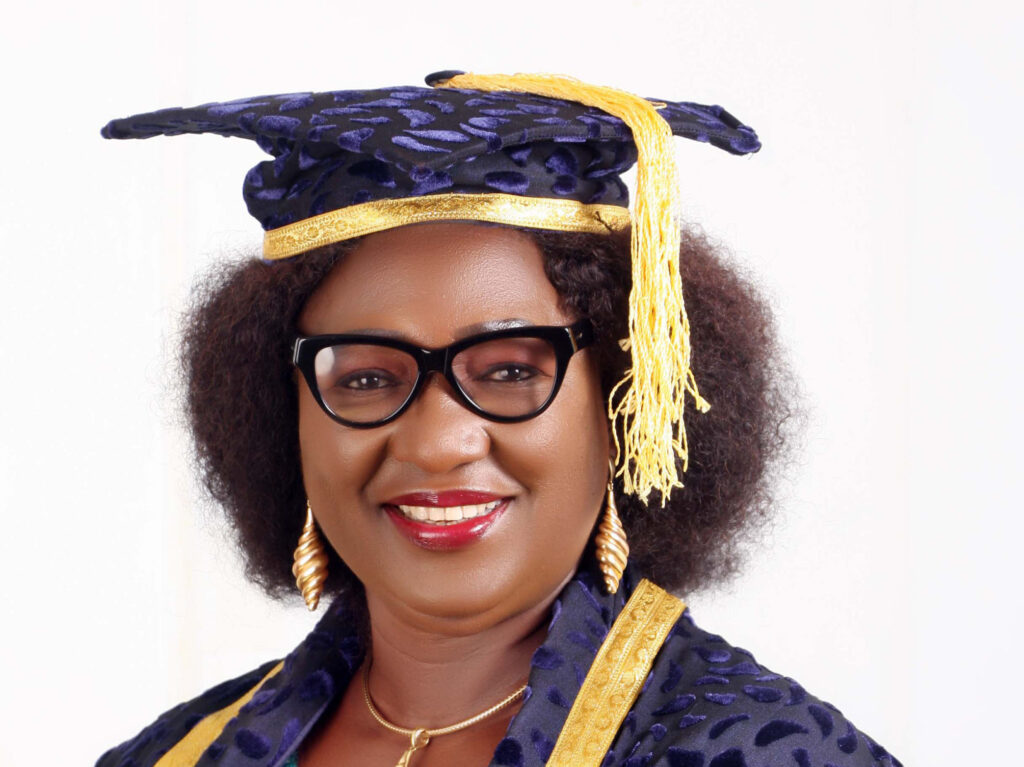
UNICAL’s Vice Chancellor, Prof. Florence Obi, denied trade-related advice, stating, “The dentistry programme remains accredited, and we are working to resolve this.” Yet, her admission of over-enrollment raises accountability questions. The students’ fight is a broader call for reform in Nigeria’s education system, where negligence must not derail aspirations. Through unity, legal action, and advocacy, these students can reclaim their future.






Leave a comment