



By Joan Chioma Obinagwam
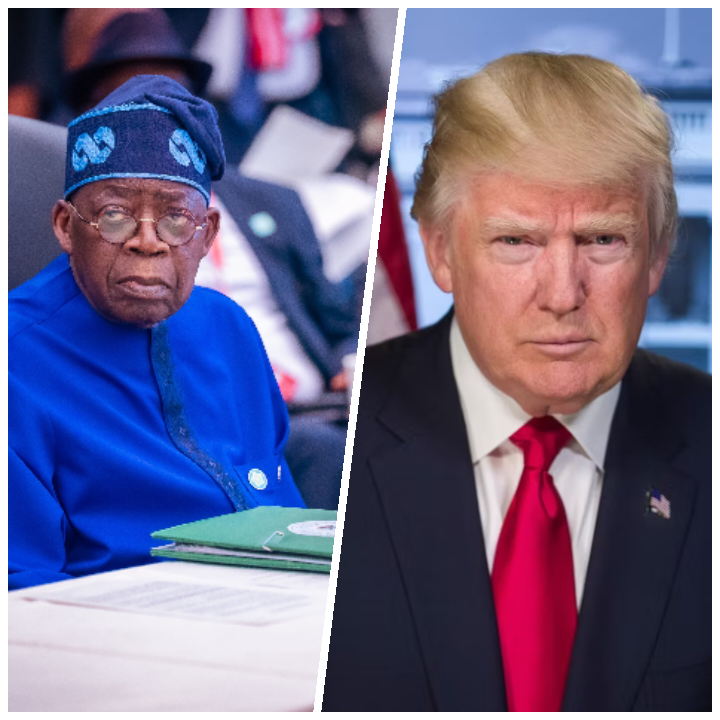
United States (U.S.) President Donald Trump on October 31, 2025, redesignated Nigeria as a “Country of Particular Concern” (CPC) under the International Religious Freedom Act (IRFA).
Confiance News reports that this label, which Nigeria last wore during Trump’s first term in 2020 before it was lifted in 2023, singles out nations for “systematic, ongoing, and egregious violations of religious freedom.” Trump’s announcement on Truth Social was stark: “Christianity is facing an existential threat in Nigeria. Thousands of Christians are being killed. Radical Islamists are responsible for this mass slaughter. I am hereby making Nigeria a ‘COUNTRY OF PARTICULAR CONCERN.’” Citing over 7,000 Christian deaths in the first seven months of 2025 alone—averaging 35 per day—the move responds to pressure from U.S. lawmakers like Sen. Ted Cruz and Rep. Riley Moore, who have decried what they call a “Christian genocide” perpetrated by groups like Boko Haram, ISIS West Africa, and Fulani militants.
This redesignation, Confiance News gathered, is not mere rhetoric; it unlocks a toolkit of U.S. responses, from diplomatic isolation to targeted sanctions. For Nigeria, Africa’s most populous nation and top oil exporter, the stakes are immense. As the country grapples with insecurity, economic fragility, and ethnic fault lines, the CPC tag amplifies vulnerabilities across economic, political, and social spheres. Below, we dissect these implications, drawing on expert voices from X (formerly Twitter), and offer pragmatic recommendations for Nigeria to reverse course.
Economy: Investor Flight, Aid Cuts
Nigeria’s economy, projected to hit $1 trillion by 2024 but hampered by inflation, debt, and oil dependency, now faces amplified headwinds. The CPC designation could trigger sanctions on key sectors, including restrictions on U.S. aid (over $1 billion annually in health, security, and development), export controls on military equipment, and visa bans for officials implicated in religious freedom abuses. More insidiously, it erodes investor confidence: foreign direct investment (FDI) inflows, already down 30% in 2024 due to insecurity, could plummet further as credit ratings sour and multinational firms like Shell—fresh off a $5 billion final investment decision—reassess risks.
On X, economic analysts warn of a ripple effect. Investigative journalist David Hundeyin, known for exposing illicit mining fueling northern violence, contextualizes the move within broader imperial dynamics: “If whoever is coming to replace the CIA asset in Aso Rock is not explicitly anti-imperialist… whatever progress is made in 4 or 8 years will be temporary. As it happened in 2015, the Yanks will eventually deploy their interference infrastructure to ensure that leadership passes directly from a competent nationalist to a complete moron.” Hundeyin argues the designation masks U.S. resource interests, including a $9 billion “blood mineral” racket in gold, lithium, and coltan, where jihadists rake in $100 million annually from ransoms and illicit trade—funds that sanctions might merely redirect to China or Russia.
Security consultant Ubasinachi Charles Okafor echoes this, highlighting tangible hits: “A CPC designation is not just a label—it opens the process for punitive actions, conditional aid, and reputational risks. For a country like Nigeria, which has important security and economic ties with the U.S., the consequences are real: from decreased security cooperation to increased investment risk.” With oil accounting for 90% of exports and U.S. firms dominating the sector, even minimal tariffs could spike fuel prices, exacerbating 34% inflation and pushing millions deeper into poverty.
Journalist Jackson Ude, a global peace ambassador, ties it to governance failures: “Nigerians should brace up for economic sanctions, trade sanctions and other Sanctions that would further weaken the country’s economic recovery. This is the outcome of poor diplomacy, poor foreign policy and poor handling of our internal affairs.” The net result? A structural wealth transfer from Nigeria’s poor to global powers, as analyst Cynical Publius notes in a broader critique of such designations: “The cost is real: it’s a structural wealth transfer from the poor and middle class to the rich, who benefit from global capital flows.”
Politics: Strained Ties, Domestic Backlash
Politically, the CPC redesignation reopens old wounds from Trump’s first term, when it strained U.S.-Nigeria relations and prompted waivers for “national interests” like counterterrorism aid. Today, with Secretary of State Marco Rubio—a prior advocate for the tag—helming Foggy Bottom, expect heightened scrutiny. It could halt arms sales critical for battling insurgents, forcing Nigeria to pivot to non-Western suppliers like Russia, which already eyes West African footholds. Domestically, it emboldens opposition narratives of President Bola Tinubu’s administration as weak on security, potentially fracturing the ruling All Progressives Congress (APC) ahead of 2027 polls.
Rep. Riley Moore, who applauded Trump’s move and vowed a congressional probe, frames it as accountability: “Thank you @POTUS for your incredible leadership by designating Nigeria as a Country of Particular Concern. You have always been a champion for Christians around the world.” Yet, Nigerian voices like Mayowa Durosinmi, an investigative reporter, decry it as performative imperialism: “We’re not very intelligent people… thinking the empire that brought in the dead Buhari… would help you unseat Tinubu… because they suddenly developed compassion for Christians… Not even the opportunists, private military contractors like Erik Prince, give a shit about your religion.” Durosinmi warns that U.S. “compassion” historically serves resource grabs, not justice—echoing how the 2020 designation yielded waivers tied to oil access.
Strategist Kalu Aja adds a layer of realpolitik: “Trump today is the president-elect; he is saying that if you join BRICS and leave the dollar… he will tariff you. Nigerians joined as a ‘partner’ days before Trump became president; I am saying it is tactically a risk.” This could accelerate Nigeria’s BRICS flirtation, but at the cost of U.S. retaliation, complicating Tinubu’s balancing act between Washington and Beijing.
Society: Deepened Divisions, Human Toll
Socially, the CPC risks supercharging Nigeria’s ethno-religious tinderbox. Northern Muslim-majority states and the Middle Belt’s Christian communities have long clashed over land and resources, with extremists exploiting grievances. Framing violence as “Radical Islamist” slaughter, as Trump did, may alienate Muslim Nigerians, who—per Information Minister Mohammed Idris—suffer alongside Christians from Boko Haram’s indiscriminate terror. Over 4-10 million internally displaced persons (IDPs) languish in informal camps, their plight buried to conceal mineral looting, as activist Mike Arnold asserts: “The regime denies 4-10 million innocent Nigerians… The Nigerian Holocaust Concentration Camps—to hide massacres and mineral grabs.”
Arnold, a human rights advocate, urges a focus on IDP testimonies over labels: “Nigerian Christians: it is time to stand and fight like your lives depend on it. Because they do… Church – rise and perform your true religious duty of serving them!” Ethno-religious scholar VA (mrdoobig) warns of backlash: “President Donald Trump’s decision… risks inflaming religious tensions and deepening existing divides within the nation’s fragile ethno-religious balance.” With 50,000-100,000 Christians killed since 2009 and 19,000 churches destroyed, the tag amplifies despair without addressing root causes like poverty and elite corruption.
Physician and commentator Tuku Agantem laments the human toll: “US just hit Nigeria with the CPC tag… Economy feels it: Investors get scared. Oil & gas… could take hits. Jobs, prices, vibes – all wobble.” For everyday Nigerians, this means more displacement, famine in IDP camps, and eroded social cohesion.
Steps to Reverse CPC
To shed the CPC yoke, Nigeria must act decisively—blending domestic reform with shrewd diplomacy. First, **bolster internal security and justice**: Launch verifiable operations against perpetrators, regardless of faith, with transparent reporting via the National Human Rights Commission. Integrate IDPs through community-led programs, as Arnold suggests, prioritizing church-state partnerships for rehabilitation.
Engage U.S. stakeholders proactively: Form a high-level task force, led by Vice President Kashim Shettima, to lobby Congress—targeting allies like Rubio—for waivers tied to milestones, such as reduced attacks. Ude’s call for “a more robust policy to… build a more robust diplomatic relationship” is key: Host joint U.S.-Nigeria forums on counter-extremism, emphasizing shared interests in Sahel stability.
Diversify, reform economically: Accelerate BRICS ties cautiously, as Aja advises, while courting EU and Gulf investors to offset U.S. pullback. Domestically, tax illicit mining revenues to fund social safety nets, curbing the “blood mineral” economy Hundeyin exposes. Okafor’s point on reputational risks underscores the need for media campaigns highlighting interfaith resilience.
Foster national dialogue: Convene a National Religious Harmony Summit, involving CAN and NSCIA, to depoliticize violence and promote inclusive governance. As Durosinmi warns, external saviors won’t suffice: Nigerians must “take back their country from the imperialist-serving puppets.”
Confiance News reports that Trump’s redesignation is a wake-up call, not a death knell. If Nigeria channels it into unity and resolve, it could emerge stronger—proving that true sovereignty lies not in labels, but in action. The world watches: Will Africa’s giant rise, or falter under the weight?



Leave a comment