


By Joan Chioma Obinagwam
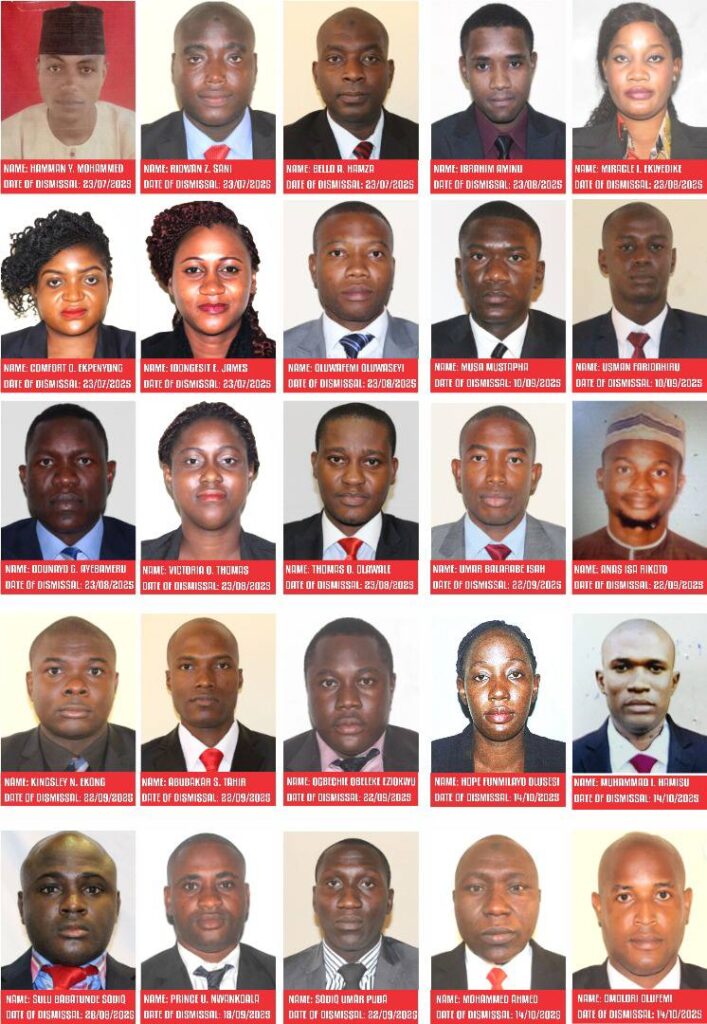
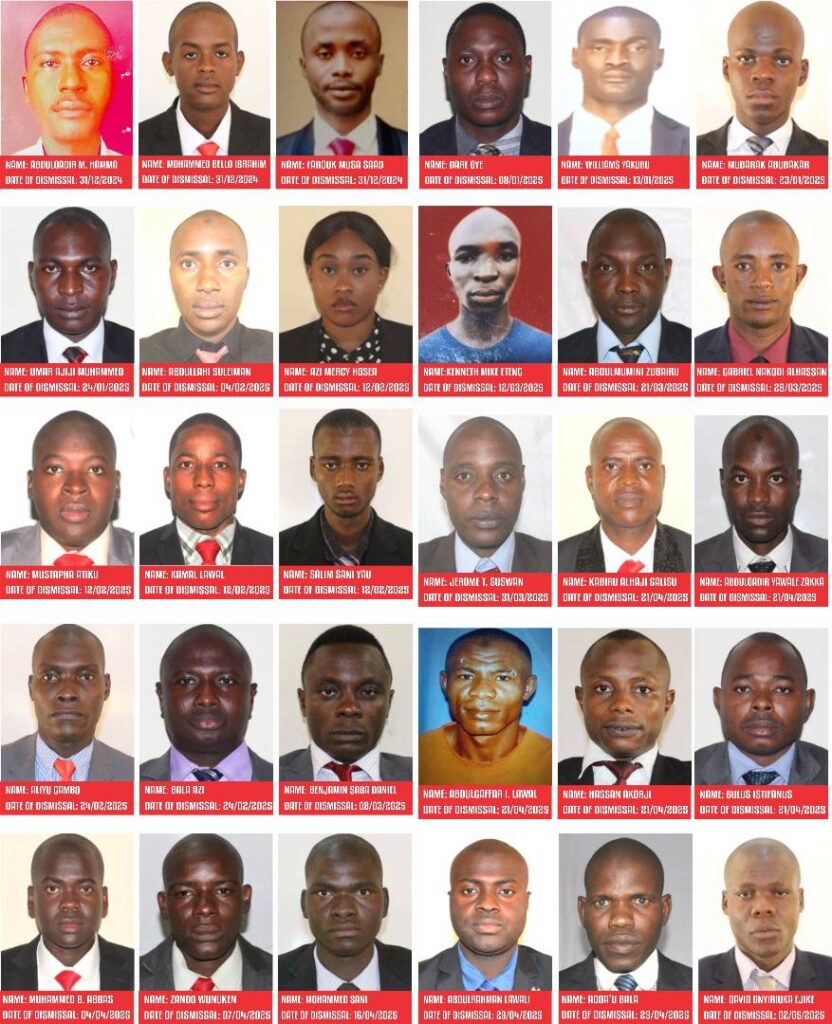
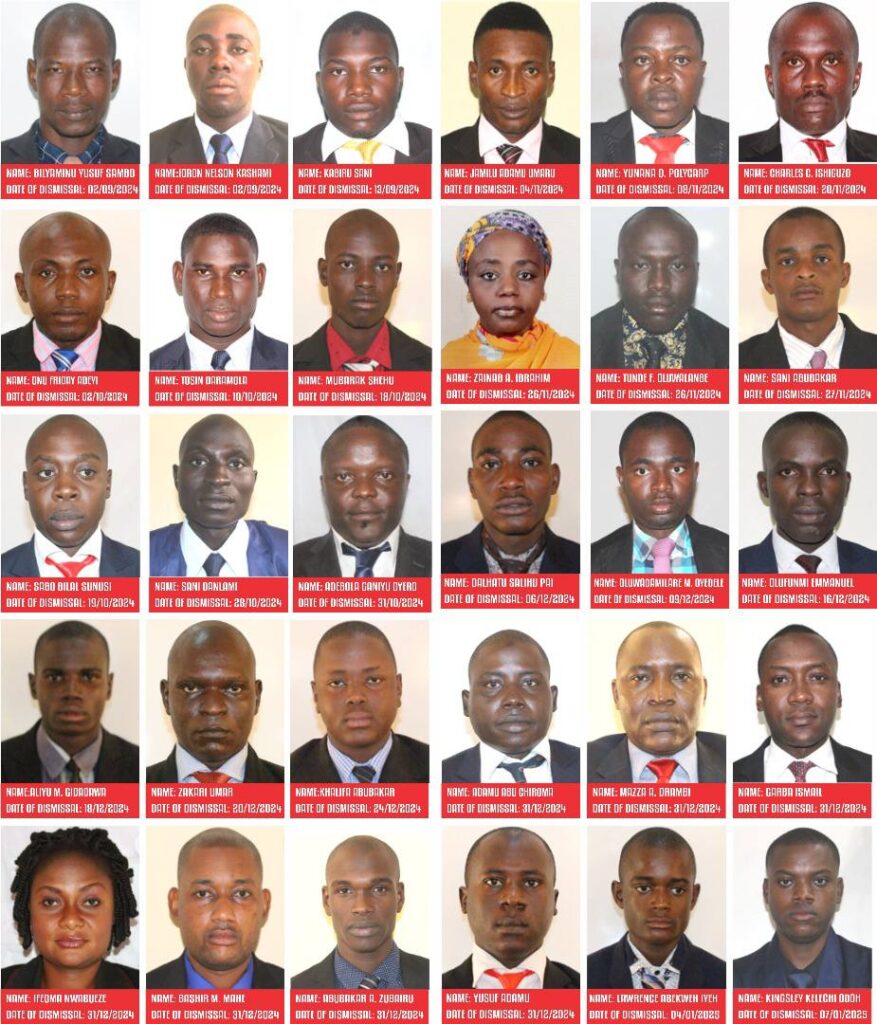
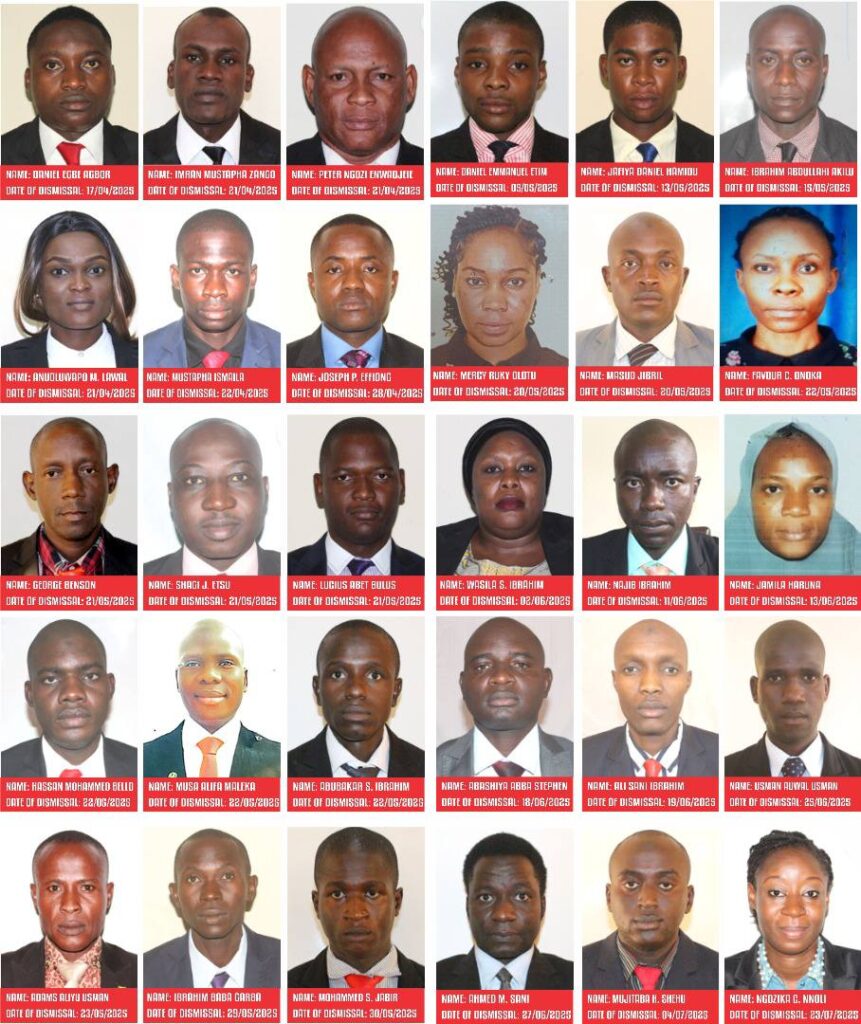
The Department of State Services (DSS) on November 4, 2025, publicly released the names, photographs, and personal details of 115 dismissed personnel on its official website. The agency framed the disclosure as part of “ongoing reforms” to uphold discipline, professionalism, and integrity, while warning the public against engaging with the former officer, some of whom have allegedly continued to impersonate active DSS operatives for fraudulent purposes. The dismissals, spanning from February to June 2025, were linked to issues like credential falsification, incompetence, and misconduct, according to DSS statements.
Confiance News gathered that what began as an internal purge to sanitize the ranks has morphed into a national controversy, with Nigerians decrying the sudden “unmasking” of intelligence operatives whose identities were once shielded for national security. Social media erupted with concerns over personal safety, potential vendettas, and broader implications for the country’s intelligence apparatus. Critics argue the timing, amid heightened geopolitical tensions, including United States (U.S). President Donald Trump’s threats of intervention in Nigeria feels suspiciously agenda-driven, turning a routine administrative action into a public spectacle.
Voices of concern
The disclosure trended under the hashtag #DSS on most social media platforms drawing reactions from everyday Nigerians and prominent figures alike. Many highlighted the human cost of exposing individuals who operated in the shadows for years.
Confiance News gathered that Yusuf Dauran (@Usouph), an X user captured the empathy for the affected officers: “Imagine being an intelligence officer with a hidden identity, probably been on a mission or many, get sacked and the world is now told about who you are. Anyways, many of these were sacked on issues with credentials, competence, others… Sad that they had to experience this.” His post resonated with thousands, underscoring the irony of revealing covert lives post-dismissal.
King (@WahalaMann) raised alarms about operational fallout: “What’s their offence? Sacking so many trained staff like this can cause a security threat.” Echoing this, comedian and social critic Seyilaw1 (Seun) pointed to the delayed publicity: “Na wa. Some of these people were dismissed as early as February this year and the latest was in June, but agenda dey sweet sha.” He suggested political motivations, implying the release served more as a performative gesture than genuine reform.
Prominent activists amplified the discourse. Physician and human rights advocate @OurFaveOnlineDoc lambasted the move as “performative pretence,” linking it to recent institutional overreactions amid the Trump controversy: “This is what made the Nigerian army post pictures that many people stated was mis-dated to deceive the audience and now DSS is posting pictures and faces of their own former officials so that the public can think they are working. It’s a thorough shame really. Total utter complete disgraceful shame.”
Controversial influencer VeryDarkMan (@vdmempire), known for his unfiltered takes on governance, reposted the DSS list with a caption questioning the agency’s priorities: “DSS sacking 115 personnels means 115 professionals in handling guns are going to be unemployed. It also means insecurity.”
Similarly, Adetutu Balogun (@Tutsy22), a governance critic, tweeted: “Exposing dismissed DSS officers’ faces? This isn’t reform; it’s revenge. How does this make Nigerians safer? It endangers lives and erodes trust in the system.”
Aisha Yesufu (@AishaYesufu), co-convener of #BringBackOurGirls, was more pointed: “The DSS’s ‘transparency’ is a farce. Publicizing identities of sacked operatives invites retaliation from enemies they’ve crossed. This is not leadership; it’s liability.”
Other users, like @NejeebBello, warned of foreign exploitation: “Publishing names, photos, and other identity markers of more than 100 sacked intelligence and secret service personnel of DSS is both a personal security risk to them, and a national security risk to Nigeria. USA which is threatening attacks just got the perfect recruitment list.” Community discussions, such as those in local WhatsApp groups, echoed this: “In my Community WhatsApp Group, the details of our Community Security Outfit like their names and identity are not posted there. For security concerns. But here are the full names and pictures of dismissed DSS personnels posted online. Nigeria is long gone!”
Experts’ perspectives
Security and governance experts have weighed in with measured but critical analyses. A senior security analyst, speaking anonymously to Platform Times, viewed the purge positively but cautioned on execution: “This is a strong and calculated message to both serving and former operatives. The DSS wants to close loopholes, protect its image and stop impostors from using its name to commit crimes.” However, Dr. Kabiru Adamu, a renowned Nigerian security consultant, told Channels Television that the mass disclosure “undermines operational integrity. These officers may have sensitive knowledge; outing them publicly could lead to coercion or assassination attempts by non-state actors.”
Governance expert Prof. Remi Aiyede from the University of Ibadan criticized the approach in a Vanguard op-ed: “While transparency combats impersonation, it must not compromise lives. The DSS’s list serves as a deterrent but ignores due process protections for ex-employees.” Former National Security Adviser Sambo Dasuki, in a rare public statement, urged restraint: “Reforms are vital, but public shaming of intelligence personnel risks deterring future recruits and exposing vulnerabilities.”
Ticking time bomb?
The publicization carries profound risks, both individual and systemic. For the dismissed officers, the immediate threat is personal: exposure could invite reprisals from criminal networks they once infiltrated, leading to harassment, blackmail, or violence. As one X user noted, “When all their families know them with other jobs not DSS. Now, their images are up for global consumption. When they were recruited, their faces were not published, so what is the essence of having their faces online on dismissal? This Country no yo tire pesin!”
Nationally, it creates a “recruitment bonanza” for adversaries. Hostile entities, domestic insurgents or foreign powers, could target these individuals for sensitive information, turning them into unwitting assets. The “mosaic effect,” where piecemeal data aggregates into actionable intelligence, amplifies this; combined with social media and public records, the list becomes a vulnerability map. Moreover, mass sacking erodes morale among active personnel, potentially sparking leaks or resignations, as seen in past DSS internal scandals. Economically, it burdens families, with one analyst estimating “post-service security” costs could strain social services.
Global comparison
Internationally, the DSS’s blanket disclosure starkly contrasts with standard practices in intelligence communities. In the United States, the Intelligence Identities Protection Act (1982) criminalizes the intentional revelation of covert agents’ identities, even post-service, unless publicly acknowledged by the government, aimed at preventing harm to operations. The CIA, for instance, avoids naming dismissed personnel; a 2025 incident where probationary hires’ partial names leaked via unclassified email drew bipartisan outrage for enabling “mosaic” identification by adversaries like China or Russia.
The UK’s MI5 and MI6 maintain lifelong anonymity for operatives, with nondisclosure agreements binding ex-employees indefinitely; public exposures are rare and litigated fiercely. Israel’s Mossad and Russia’s FSB similarly shield identities, viewing disclosure as a breach of tradecraft. Even in non-Western contexts, like India’s RAW, dismissals are handled internally without fanfare.
This Nigerian approach is not an internationally recognized practice; it’s an outlier, potentially violating human rights norms under the African Charter on Human and Peoples’ Rights, which protects privacy and security. Experts like those at the International Institute for Strategic Studies label it “counterproductive,” arguing it deters talent and invites exploitation—far from the discreet, internal accountability seen globally.
Toward smarter reforms
Security experts advocate for balanced, best-practice reforms over sensationalism. Dr. Adamu recommends “tiered disclosures”: Publish warnings without photos for low-risk cases, reserving full identities for proven fraudsters via court orders. Prof. Aiyede suggests independent oversight, like a parliamentary committee, to review dismissals pre-publication, ensuring proportionality.
Confiance News learnt that globally inspired fixes include mandatory post-dismissal support: relocation stipends, counseling, and legal aid, as in U.S. protocols for at-risk ex-agents. The DSS could adopt “no-leak” digital verification tools for public checks, minimizing exposure. As one expert put it: “Transparency builds trust; humiliation breeds enemies.” Ultimately, Nigerians deserve an intelligence service that protects, not parades, its own.
This situation reflects underlying challenges: In a country navigating complex security concerns, reforms are ideally positioned to foster unity and understanding. As discussions continue, the aspiration remains for transparency and stability to coexist.
Photo caption: Photos of 115 dismissed DSS officers. Photo credit: DSS official website.




Leave a comment