



By Joan Chioma Obinagwam
Ada Nwogu’s story is a heartbreaking yet powerful reminder of the vulnerability many Nigerians face in the face of recurring natural disasters, especially in flood-prone urban areas like Lagos. In her late 50s and unmarried, Ada lives a modest life in Powerline, a low-lying community in Ojodu, Lagos, sharing a small rented house with her two younger siblings. For years, she has worked as a freelance marketer for an insurance firm, tirelessly going door-to-door and networking to bring in clients on a pure commission basis. Her income is unpredictable—some months are good, others leave her barely scraping by—but she has always believed in the importance of insurance, even if she could never afford to buy a policy for herself.
Life had already dealt Ada a devastating blow just six months earlier. Her previous home in Akiode, Ojodu, had been completely gutted by a fire that started from yet unknown sources one fateful afternoon. She and her siblings were at work at the time.
”I was at work when I was called to return home because my house was on fire
The loss was total: furniture, clothes, important documents, and every small saving they had put into making the place a home. In the aftermath, Ada relied entirely on the kindness of friends, church members from her local congregation, and occasional small donations to rebuild. They managed to rent the modest house in Powerline, seeing it as a fresh start in a quieter part of Ojodu. “I thought God had finally given us peace,” she later recalled.
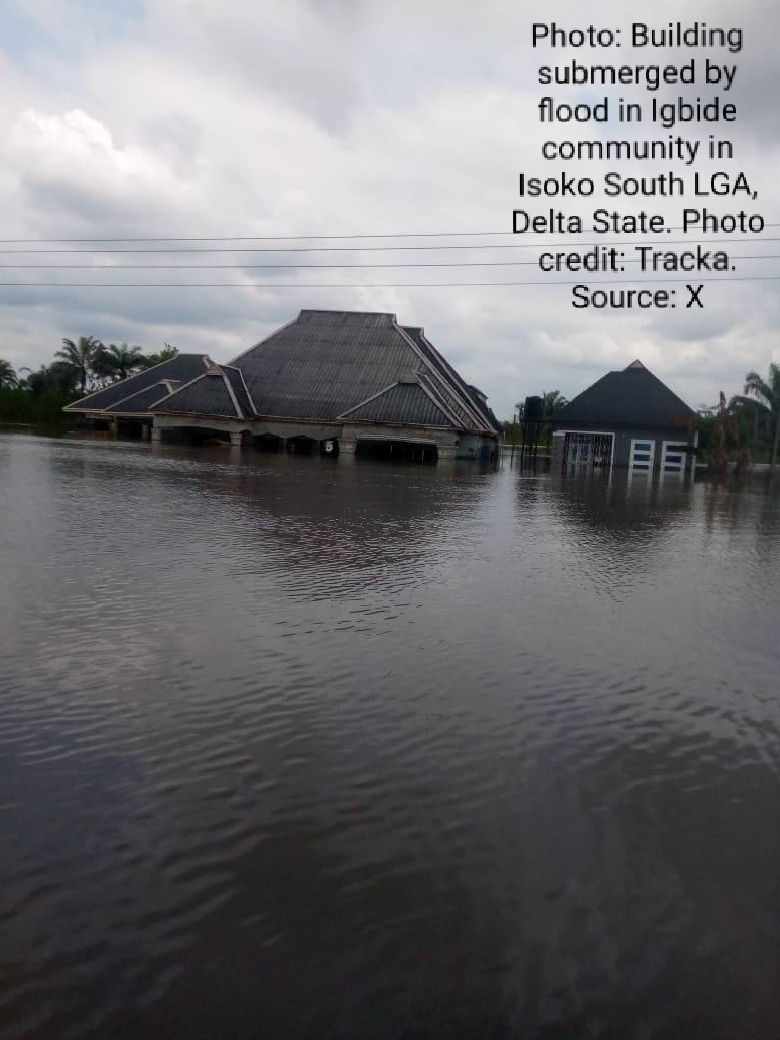
But peace proved short-lived. During one of the heavy rainy seasons that have become more intense in recent years—marked by relentless downpours and poor drainage in many Lagos neighbourhoods—the flood came without much warning.
It started around midnight. Ada was asleep in the small bedroom she shared with her siblings when she felt an unusual cold wetness seeping through her mattress. At first, she thought it was a dream or perhaps a leaking roof. But as she stirred and switched on her torchlight, the reality hit her: water was rising fast inside the house. The entire living room was already ankle-deep, then knee-deep within minutes. The floodwaters, swollen from hours of torrential rain and overflowing canals nearby, had surged in through every crack and opening.
”I screamed for my brother and sister to wake up,” Ada recounted. “We tried to grab what we could—phones, a few clothes—but the water was everywhere. It was dark, cold, and rising so quickly. We waded out barefoot, holding hands to stay together, and made it to higher ground down the street where some neighbors were already gathered.”
By morning, their home was uninhabitable. The flood had swept away furniture, ruined walls, destroyed electrical appliances, and turned everything they owned into sodden wreckage. The house they had moved into less than six months after the fire was now gone in the same way—lost to disaster.
The irony was almost unbearable for Ada. As someone who spent her days explaining the value of insurance policies to others, she had none for herself. Comprehensive home insurance, the kind most people could afford if they had one, typically covers fire but offers only limited or no protection against flooding. Standalone flood insurance, a more specialized product that could have provided dedicated coverage for such events, remains rare and unaffordable for many low- and middle-income Nigerians, especially those living on irregular commissions like Ada.
”I sell insurance every day,” she said quietly in an interview that highlighted the gaps in Nigeria’s insurance landscape. “I tell people how it can protect them from loss. But when it came to my own home—twice now—I had nothing. I couldn’t afford the premiums. And now, we’re back to depending on the church, friends, and whatever help comes our way.”
Ada’s experience reflects a broader reality in Nigeria, where floods have become more frequent and severe due to climate change, poor urban planning, and inadequate drainage systems, particularly in areas like Ojodu. Many people, even those with some form of property insurance, discover too late that standard comprehensive policies fall short when it comes to flood damage. This leaves victims like Ada in a cycle of loss and recovery through charity rather than structured protection.
Her story calls attention to the urgent need for more accessible standalone flood insurance products in Nigeria—policies designed specifically to cover flood risks, with affordable premiums tailored to the realities of ordinary citizens. Until such options become widely available and embraced, countless families will continue to face double devastation, just as Ada has. Despite everything, she remains resilient, still going out to market insurance policies, hoping that one day, the protection she promotes will be within reach for people like her.
Flooding in Nigeria
Flooding is a significant natural hazard affecting many parts of the world, and the most populous black nation in the world— Nigeria is no exception. The country has experienced numerous devastating floods over the years, causing substantial economic losses and displacing millions of people.
Data mined from the National Emergency Management Agency (NEMA) showed that the year 2022 flood, which was one of the most catastrophic in the last 12 years, displaced over 1.4 million people and claimed 612.
More so, the Nigeria Flood Impact, Recovery and Mitigation Assessment Report, conducted by the National Bureau of Statistics (NBS), National Emergency Management Agency (NEMA), and supported by the United Nations Development Programme (UNDP), revealed that approximately 64 percent of households across six states in the country (Anambra, Bayelsa, Delta, Jigawa, Kogi and Nasarawa) were affected by the floods, with rural areas suffering disproportionately more than urban centers.
With over 650,000 hectares of farmland damaged, it may worsen already alarming levels of hunger and malnutrition in the country, since more than 19.5 million people in Nigeria were already facing severe food insecurity before the floods, according to the 2022 Cadre Harmonisé food security and nutrition assessment.
Reacting, the Head, Government Affairs Division of FMDQ Group, Mr. Emmanuel Etaderhi, said: It’s good to put some numbers to these things so that people can understand the depth of the challenge. Using the exchange rate back in 2022, which, today is a different story. The estimated loss for that flood that we had in 2022 was N4.2 trillion. It was about $9.12 billion. In today’s exchange rate, that will be multiplied by 4 or almost 5. So, you will be talking about $40 billion.”
“If we allow what happened in 2022 to repeat itself today in Nigeria, we will lose about $40 billion to flooding. What is the size of our external reserves as a country? The numbers are there.
I’m not sure we have gone beyond 45 in the last five years. So, if you lose something that is almost 100 percent of your reserves, it will tell you the impact. The severity of the challenge, if it’s a major challenge. As a country, our GDP is about $400 billion. So, we could lose 10 percent of our GDP to flooding. That is a dangerous situation,” he warned.
Sadly, despite the increasing frequency and severity of flood events, comprehensive coverage provided by most insurance companies in Nigeria often falls short of adequately addressing flood risks.
Flood Insurance
According to Investopedia, a financial media website, flood insurance is a type of property insurance that covers a dwelling for losses sustained by water damage, specifically due to flooding.
In Nigeria, the insurance industry has made considerable strides in providing various types of coverage, including life, health, auto, property, and marine insurance. However, when it comes to flood insurance, most policies are bundled under comprehensive coverage, which typically includes protection against fire, theft, and natural disasters like floods.
Etaderhi said: “Only about four companies actually cater to flood risk directly out of the plethora of insurance companies in Nigeria and those who mention flood risk, it is usually hidden under fire. So, there is no direct policy covering you for a flood. But every time we have this flood challenge, people lose a lot of money.”
While this may seem adequate on the surface, the reality is that comprehensive coverage often lacks the specificity and depth required to address the unique challenges posed by floods.
One of the primary issues with comprehensive coverage is the ambiguity surrounding what constitutes flood damage and the extent of coverage provided. Policyholders may find themselves in situations where their claims are disputed or denied due to unclear policy terms or insufficient coverage limits. Additionally, comprehensive policies may not account for the full spectrum of flood-related losses, such as damage to infrastructure, loss of income, and the cost of temporary relocation.
Expert opinion
There are many reasons why Nigeria is still struggling with flooding. Head of Operations at NEMA, Lagos Zonal office, Ibitayo Adenike, remarks: “When we talk about inadequate infrastructure, we mean the lack of drainage systems and flood control infrastructure. Most of our rural areas don’t have good drainage systems and where they have they are not well constructed and this is a big challenge. Even the urban areas where we have these systems, due to dumping of refuge and things inside the drainages, they are blocked.”
She also cited inefficiency in existing policies with regards to urbanization and land use.
“We have poor land use planning. Unregulated urban expansion and poor zoning. Most of the time, the act of flooding in some urban areas, and even some rural areas, are caused by these. We need to enforce strict land use policies that cater to flood risk. Implement zoning that caters to flood prone areas.Most of the time, what we see is the construction of buildings in flood prone areas. I think there should be a regulation concerning this. The necessary agencies should look into this,” she advised.
FSD Africa report
Prompted by the severity of flooding in the country, FSD Africa, a specialist development agency, established in 2012 and supported by UK aid, conducted a survey which culminated into the signing of a flood risk policy between the United Nations Development Programme (UNDP) and Lagos State.
According to the report, insurers play a limited role as few insurance products that manage flood risks exist in the Nigerian market beyond typical personal household or business property insurance which covers multiple perils.
Hurdles
The provision of standalone flood insurance in Nigeria faces several challenges, ranging from risk assessment to market acceptance. The FSD Africa in its report also cited inaccurate assessment of flood risk as one of the most significant hurdles.
“To a significant extent, this is due to data issues which hinder insurers’ ability to price the risk, as well as a lack of technical expertise in this space and current low demand for standalone flood products,” it says.
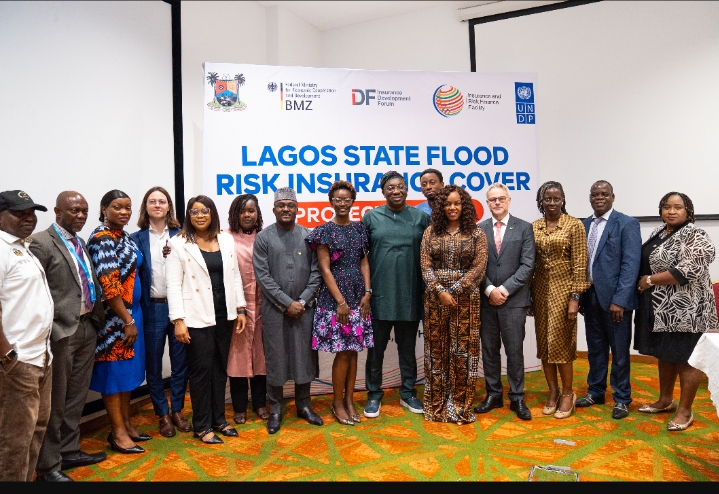
Photo caption: Representatives of the Lagos State Government, the United Nations Development Programme (UNDP), and the Insurance Development Forum (IDP) at the launch of the Lagos State Flood Risk Insurance Cover. Photo credit: UNDP
Flood risk modeling requires extensive data on rainfall patterns, topography, river flow, and historical flood events. In many parts of Nigeria, such data is either lacking or incomplete, making it difficult for insurers to accurately price flood insurance policies.
Mr. Etaderhi, who is also the Executive Secretary, Financial Centre for Sustainability, Lagos, said: “Flood is a tough product and dimension according to practitioners.”
Another challenge is the relatively low level of insurance penetration in Nigeria. With only about 2 percent of the population having any form of insurance, there is a general lack of awareness and understanding of the benefits of insurance, including flood insurance. Many Nigerians view insurance as an unnecessary expense, further compounded by the perception that insurers are reluctant to pay claims.
Moreover, the regulatory framework for insurance in Nigeria is still evolving. While the National Insurance Commission (NAICOM) has made efforts to enhance regulatory oversight and promote best practices, there is still a need for more robust guidelines and policies specifically tailored to flood insurance.
Benefits
The existing hurdles also represent a significant and largely untapped market opportunity for Nigerian insurers. Investing in direct flood risk coverage offers several compelling advantages.
For instance, the vast majority of Nigerians are currently uninsured against flood risks. This represents a substantial untapped market with significant growth potential. By offering affordable and accessible flood insurance products, insurers can tap into this market and generate significant revenue. This is particularly true given the increasing frequency and severity of flood events, which is likely to drive demand for such coverage.
Additionally, it provides clearer and more comprehensive coverage for flood-related losses. Policyholders would have a better understanding of what is covered, the coverage limits, and the claims process, leading to greater trust and confidence in the insurance industry.
Moreover, standalone flood insurance could encourage better risk management and mitigation practices. By accurately assessing and pricing flood risks, insurers could incentivize policyholders to adopt flood-resistant measures, such as elevating structures, improving drainage systems, and using flood barriers. This could ultimately reduce the overall impact of floods and lower the cost of claims for insurers.
It is important to note that while the initial investment in developing a flood insurance market may be significant, the long-term growth potential is substantial.
Success stories
To better understand the potential benefits and challenges of implementing standalone flood insurance in Nigeria, it is helpful to look at case studies from other countries. One notable example is the United States, where the National Flood Insurance Program (NFIP) was established in 1968 to provide flood insurance to property owners in participating communities. The NFIP has faced its share of challenges, including issues with pricing, underwriting, and claims handling. However, it has also provided valuable lessons on the importance of accurate risk assessment, community involvement, and regulatory oversight.
United Kingdom
Another example is the United Kingdom, where Flood Re was introduced in 2016 to provide affordable flood insurance to high-risk properties. Flood Re is a reinsurance scheme that works with insurers to offer coverage to households in flood-prone areas. The scheme has been successful in increasing the availability and affordability of flood insurance, while also promoting better flood risk management practices.
Kenya
The aftermath of a devastating flood in Tana River County, Kenya, in 2023, led to the partnership between Britam Insurance Kenya and FSD Africa. This marked a turning point for communities historically overlooked by private-sector solutions. Britam, supported by FSD Africa, spent over two years designing and piloting Kenya’s first-ever flood insurance product to address this chronic risk.
The pilot’s subsidised premiums, funded in part by Oxfam Kenya, ensured that even the most vulnerable had access to this groundbreaking financial safety net.
Britam’s flood insurance programme represents more than just financial aid—it is a model for how innovative solutions can bridge the gap between humanitarian relief and sustainable development.
Lagos State
Launched in May, 2023, Lagos State, southwest Nigeria, became the first and only state in Nigeria that has implemented a standalone insurance policy out of the 36 states of the federation.
“It is with great delight that I stand on behalf of the State together with UNDP, German Government and IDF for the Launch of the Flood Risk Cover for Lagos State.” – according to the welcome remark by the Governor of Lagos State Jide Sanwo-Olu, represented by the Lagos State Commissioner of Economic Planning, Mr. Sam Egube.
Way forward
Drawing from the experiences of other countries and even the successful launch of the “Flood Risk Cover for Lagos State”, there is no doubt the same standalone flood insurance model can be replicated in other states of the federation.
Achieving this will require huge investments in data collection. This includes gathering detailed information on rainfall patterns, river flow, topography, and historical flood events. Leveraging technology, such as remote sensing and geographic information systems (GIS), can improve the accuracy of flood risk assessments.
Public enlightenment and campaigns on the benefits of insurance in general and standalone flood insurance cannot be overemphasized considering the low insurance penetration rate in the country. This can be achieved through collaboration between insurers, government agencies, and community organizations. In the words of the Executive Secretary, Financial Centre for Sustainability, Lagos,”So, the kind of solutions that would work as I mentioned a bit earlier in my interventions has to do with ensuring that businesses, individuals that own properties, corporate organisations take insurance against flood.”
Again, there is a need for Nigeria’s insurance regulator, NAICOM, to strengthen its regulatory framework for flood insurance.
Leveraging Public Private Partnerships (PPPs) can facilitate the development and implementation of standalone flood insurance. The Nigerian government and other states of the federation should emulate Lagos State’s “Flood Risk Cover” model. The government can also provide financial incentives, such as subsidies or tax breaks, to encourage insurers to offer flood coverage.
Furthermore, reinsurance can help insurers manage the financial risks associated with large-scale flood events. By transferring a portion of the risk to reinsurers, insurance companies can increase their capacity to offer flood coverage and ensure financial stability. Additionally, the development of catastrophe bonds and other risk transfer mechanisms can provide additional financial protection.
Ibitayo said: “For us to have a way out of this, we need to invest in infrastructural development. Then, have a sustainable drainage system and retention basis.
Prioritise projects based on risk assessment and community needs. We have to know the needs of the community.
We need to integrate resilience into the flood risk management plan. Promote adaptive practices and invest in infrastructure that can enhance resilience.”
Flooding is a significant and growing threat in Nigeria, and the current approach of bundling flood coverage under comprehensive policies is inadequate to address the unique challenges posed by this hazard. Standalone flood insurance is essential for providing clearer and more comprehensive coverage, encouraging better risk management practices, and supporting disaster recovery and resilience.
“Banks need to be a bit more strategic around the kind of investments that they do. The private sector should be Insurance conscious, not look at one angle of insurance as comprehensive but also be specific. Looking at the dynamics; looking at the different states, and regions where they are. Gone are the days when we thought that in Maiduguri you might not need a flood risk product, but here we are now. Flood risk products could have just been a help. You never know where the environment is changing to; nature is taking a different angle,” the Chief Executive Officer, Nigeria Climate Innovation Center (NCIC), Mr. Bankole Oloruntoba, urged.








Leave a comment